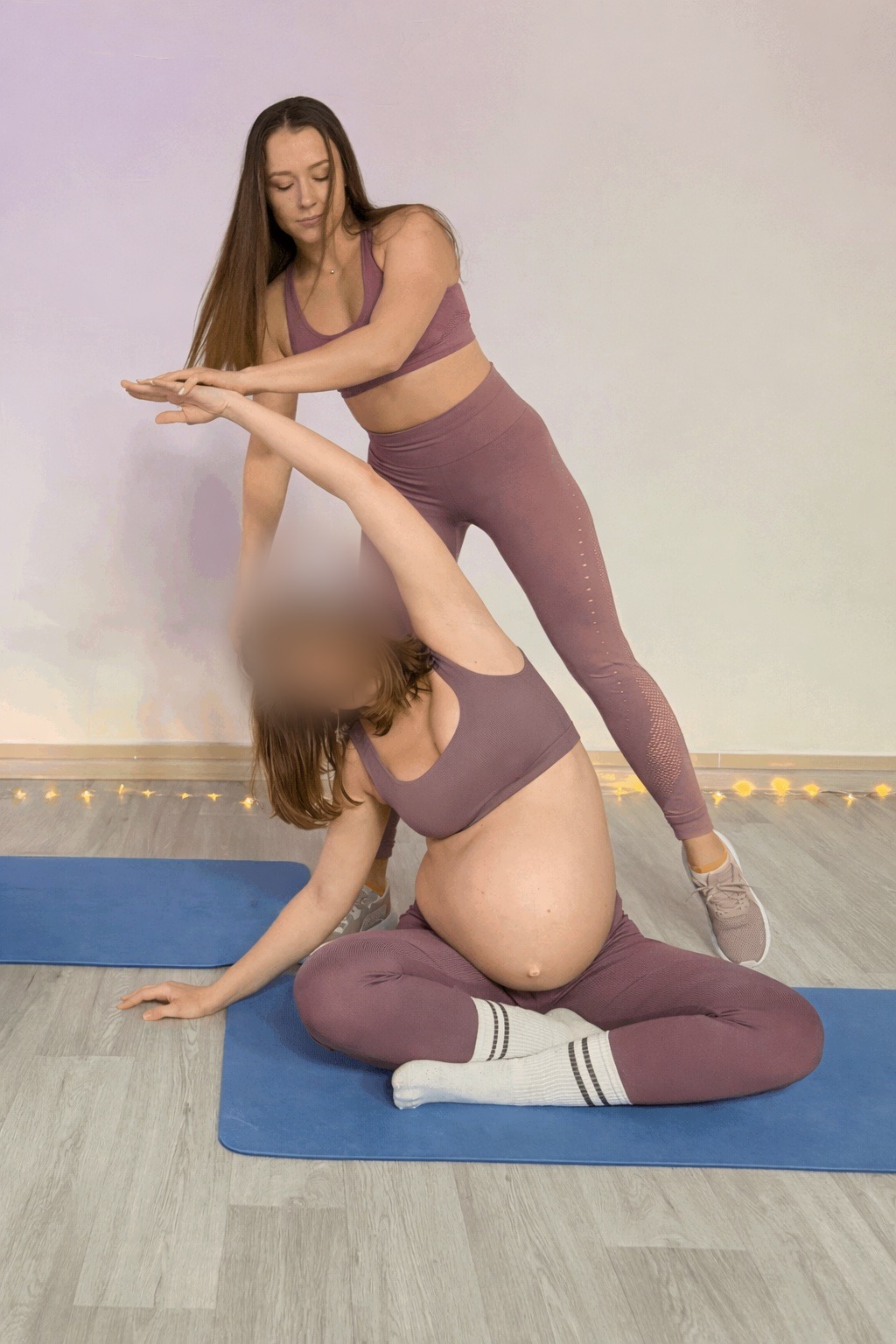
In short. After an uncomplicated vaginal birth, gentle Kegels can start in the first days; after tearing or an episiotomy, once the stitches stop hurting during ordinary movement; after a caesarean, from the first days with the scar as the guide. Technique: on the exhale draw the muscles around the vagina and anus up and in, hold 3–5 seconds, release fully, keeping the belly and glutes relaxed. Schedule: first 2 weeks – 2 sets of 8–10 short squeezes; weeks 3–6 – 3 sets of 10 held for 5 seconds; weeks 6–12 – add quick squeezes and sitting and standing positions. Release matters more than strength: an overworked pelvic floor goes into hypertonus and gives the same symptoms as a weak one. With prolapse, with leakage lasting beyond 6 weeks of daily practice, or when there is no contact with the muscle at all, the programme is set by a specialist in person.
How soon after birth can you start
This is the first question I am asked, and the answer depends not on a number of days but on how the birth went.
Vaginal birth without tearing. Gentle Kegels can start in the first days. Gentle is the operative word: a short 2–3 second squeeze, no effort, lying down. The task of the first days is not to strengthen but to restore the brain’s connection with a muscle that has just stretched several times over. The sooner that contact returns, the sooner control does.
Tearing or an episiotomy. Wait until the stitches stop hurting during ordinary movement – usually day 5 to 10. Start not with a squeeze but with an attempt to feel the muscle: direct your attention to the perineum and notice whether anything responds. Add a full squeeze once the attempt is painless.
Caesarean section. There is a common misconception here: the baby did not pass through the birth canal, so the pelvic floor is untouched and needs no work. In fact it held the weight of a growing uterus for nine months, and that is the main load. Kegels after a caesarean can start in the first days – the pelvic floor was not cut. The single guide is the absence of pulling pain at the scar. On the rest of recovery after surgery, see Training after a C-section.
When the doctor sets the date, not a guide. Complicated birth, significant blood loss, haematoma, third or fourth degree tear, suspected prolapse – in these situations the start is decided by an examination, not a calendar.
How to do it: step by step
Kegels look simple right up to the point where it turns out that roughly half of women do them wrong and train the wrong muscles.
- Lie on your back, knees bent, feet on the floor hip-width apart. Lying down for the first weeks: in this position the weight of the internal organs does not press on the pelvic floor.
- Find the muscles. The reference sensation is stopping the flow of urine and holding back wind at the same time. The movement goes up and in, not out.
- Squeeze on the exhale. The exhale is the key detail: on the exhale the diaphragm rises and the pelvic floor rises with it, so the body is helping you. On the inhale the opposite happens.
- Hold for 3–5 seconds, breathing calmly. Holding the breath is the most common mistake – it raises intra-abdominal pressure and works against you.
- Release fully for as long as you held. Not “half relaxed and squeeze again” – all the way.
- Check yourself: belly, glutes and inner thighs should stay relaxed. If the glutes tighten and the pelvis lifts slightly, you are not doing a Kegel.
One caveat about “stopping the flow of urine”: that is a reference for finding the muscle, not a training method. Interrupting urination regularly disrupts bladder function.
How to know it is working
Three home checks that need nothing but attention.
- Hand on the perineum. Place a hand there and squeeze. Correct feels like a slight movement up and in under the hand. If the perineum pushes outward, you are bearing down rather than lifting.
- Hand on the belly. During the squeeze the belly stays soft, neither hardening nor bulging. A hard belly means the abdominals are working, not the pelvic floor.
- Breath. You can speak calmly while holding. If you have to hold your breath to squeeze, the effort is excessive – halve it.
How many a day: the first 12 weeks
Below is a guide for recovery without complications. With tearing, a caesarean or existing diagnoses, the pace shifts one to two weeks later.
| Period | What we do | How much |
|---|---|---|
| Weeks 1–2 | Short gentle squeezes lying down, finding contact with the muscle | 2 sets of 8–10 squeezes for 2–3 seconds |
| Weeks 3–6 | Longer holds, quick squeezes added | 3 sets: 10 slow at 5 seconds + 10 quick |
| Weeks 6–12 | The same work sitting and standing, movement added | 3 sets: 10 slow at 6–8 seconds + 10 quick |
| After week 12 | Maintenance: the pelvic floor works inside ordinary exercise | 1 set a day + conscious engagement in a squat and when lifting the baby |
The reason for moving to sitting and standing is simple: leakage does not happen lying down, it happens when you stand up, cough, or lift the pram. The muscle has to learn to work in the position where it is actually needed.
More is not better. A hundred repetitions a day does not speed recovery, it produces overload.
Reverse Kegels: why release matters more than strength
Almost nobody writes about this part, and it solves half the problems.
The pelvic floor is a muscle, and like any muscle it can be not only weak but over-tense. That state is called hypertonus, and its symptoms are the same as weakness: leakage, heaviness, discomfort during intimacy, pain. The difference is that with hypertonus the usual Kegel makes things worse – you are adding a squeeze to a muscle that already cannot let go.
After birth, hypertonus is more common than people assume: painful stitches, fear of pain, constant tension from broken sleep and anxiety all hold the pelvic floor tight.
A reverse Kegel is deliberate release. On the inhale, imagine the perineum softly opening and lowering, as if allowing something to pass, but without bearing down. Hold that sensation for 5 seconds and return to neutral on the exhale. Five to eight repetitions, ideally in the evening.
If an ordinary Kegel brings discomfort, pain or a sense that things got worse, start with the reverse version and see a pelvic health specialist. The difference between hypertonus and hypotonus is covered in detail in the full guide to the pelvic floor after birth.
If you cannot feel the muscles at all
This is normal in the first weeks: tissues are swollen, sensation is reduced, the signal from brain to muscle is not getting through. No reason to panic, and no reason to wait for it to “come back on its own” either.
What helps restore contact:
- Working through the breath. Lying down, hand on the lower ribs. On the inhale the pelvic floor naturally lowers, on the exhale it lifts. For the first week simply follow that movement without trying to squeeze. Contact often returns exactly this way.
- A tactile reference. Hand on the perineum, attempt a squeeze using the sensation under the hand.
- Changing position. On all fours or lying on the side, many women find the muscle more easily than on their back.
- Time of day. In the morning, before fatigue accumulates, the contact is usually clearer.
If after 3–4 weeks of regular attempts you still feel nothing, that calls for an in-person assessment, not for doubling the effort. A pelvic health specialist can check whether there is any contact and add biofeedback if needed.
Kegels with prolapse and with urine leakage
This is where a general guide ends and individual work begins.
With prolapse the exercises are needed – but the programme is set by a doctor or pelvic health specialist after an examination establishes the degree. Loading a prolapse intensively on your own is not safe: if the muscles are in hypertonus, extra squeezing will make it worse, and marked degrees need a different approach. What is definitely out until a consultation: any exercise with bearing down, heavy lifting, prolonged standing work, jumping and running.
With urine leakage Kegels are the main tool, and they work: in most women the symptom reduces or resolves within 6–8 weeks of regular practice. A useful technique is a quick squeeze at the moment of the trigger – before a cough, a sneeze, lifting the baby. The muscle learns to fire when it is needed.
But if leakage persists beyond six weeks of daily practice, there is no point continuing alone. Either the technique is wrong or the cause is not weakness, and both are only visible at an in-person appointment.
Common mistakes
- Squeezing glutes and belly. The most widespread one: the large surrounding muscles work and the target muscle does not engage at all.
- Holding the breath. Raises intra-abdominal pressure and presses down on the pelvic floor from above – exactly what we are avoiding.
- Training through pain. Pain during a Kegel is not a sign of effort, it is a signal to stop and investigate.
- Forgetting the release. Half the exercise is letting go. Without it the muscle shortens.
- Doing them on the toilet. Interrupting the flow as a regular practice disrupts bladder function.
- Quitting after a week. The first changes come at weeks 3–4, a noticeable result by weeks 8–12. One week of daily practice shows nothing.
- Treating Kegels as the whole of recovery. The pelvic floor works together with the diaphragm, the transverse abdominis and the glutes. Isolated Kegels without the rest give half the result – the overall route is in the guide to postpartum recovery.
When to see a specialist
Do not put off an in-person appointment if:
- leakage of urine or wind persists beyond 6 weeks of daily practice;
- there is a sense of heaviness, pressure or something present in the vagina;
- intimacy is painful;
- after 3–4 weeks of attempts there is still no contact with the muscle;
- Kegels cause pain;
- stitches after tearing or an episiotomy still trouble you beyond 6 weeks.
None of this means the case is severe. It means you need an outside view and a hands-on check of technique, which no text can replace.
What comes next
Kegels are a basic skill, not a whole programme. Once contact with the muscle has returned and the first weeks are established, the next step is to build the pelvic floor into ordinary movement: lifting the baby, squatting, walking with the pram. That is where it needs to work automatically.
The full week-by-week picture is in postpartum recovery week by week. Work on the belly and the linea alba is covered in the article on diastasis recti. If you prepared before pregnancy and want to compare how the same work looked then – Kegel exercises during pregnancy.
If you want your technique checked in person and a schedule built for your situation, come to a trial session. We will look at whether contact with the muscle is there, rule out hypertonus, and build a plan for the coming weeks. A trial session costs from 1,400 rubles (online). I work in Samara in person and online across Russia.
This article is for informational purposes and does not replace medical advice. Clearance from your obstetrician-gynaecologist is needed before returning to exercise after birth.