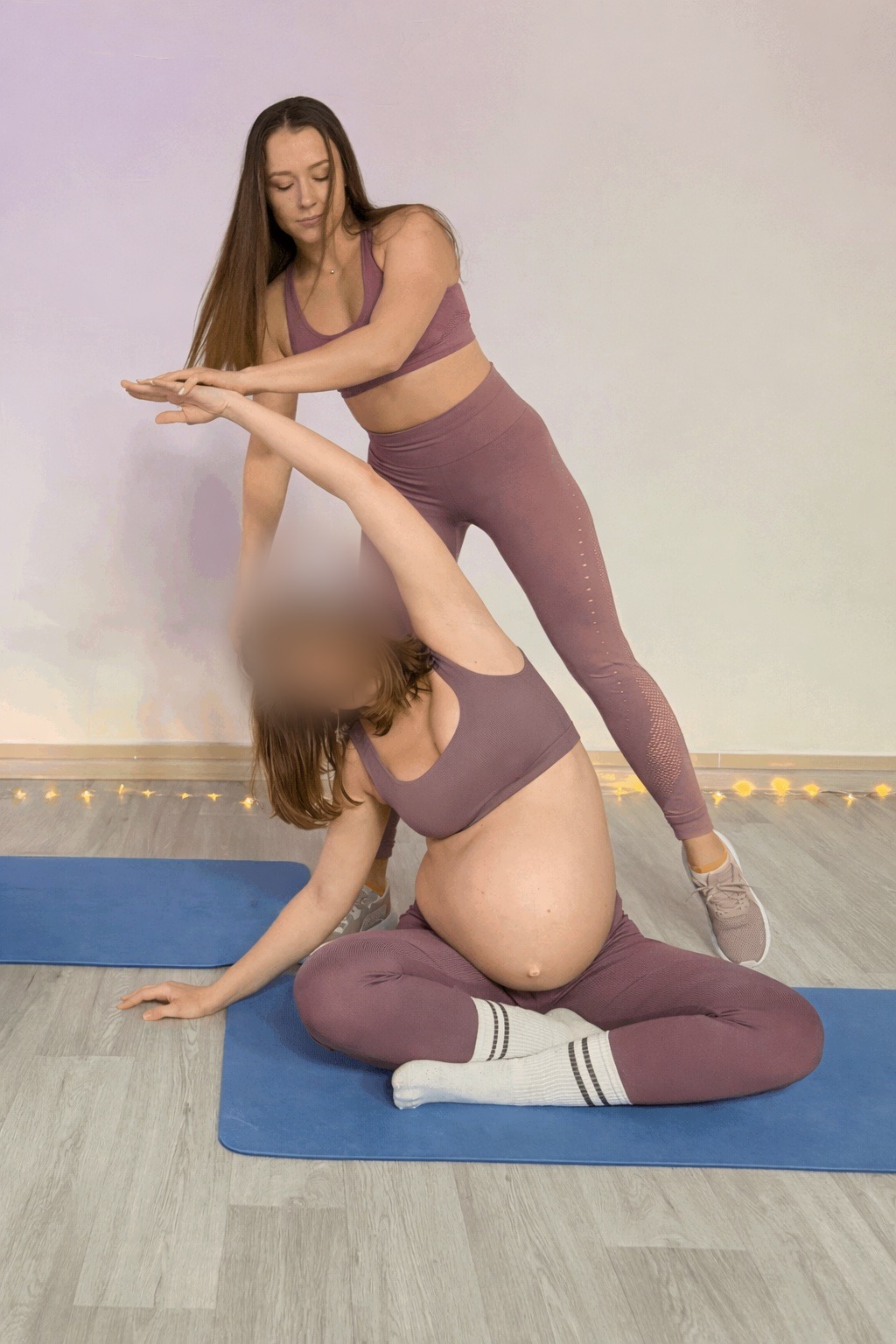
In brief. Kegel exercises during pregnancy serve three purposes: prevention of urinary leakage (30–40% of pregnant women experience leakage with coughing or laughing in the second half of pregnancy; regular Kegels cut the risk by 2–3 times), preparing the pelvic floor for stretching in labour and reducing the risk of tears, and faster postpartum recovery. In a normally progressing pregnancy they are safe at any stage – from the first to the third trimester. Contraindications: threatened miscarriage, placenta praevia, uterine hypertonus – in those cases, consult a doctor first. Classic scheme: 3 sets of 10 slow contractions plus 10–15 fast contractions daily – about 5–7 minutes a day. Consistency matters more than volume: better 5 minutes every day than a lot rarely. Signs of correct technique: a gentle lift in the perineum; belly, glutes, and thighs do not engage; breathing stays calm; each contraction is followed by full release. For effective pushing in labour you have to be able not only to contract but also to fully relax the pelvic floor – this skill is built through regular practice. How to tell normal tone from a warning sign – in uterine tone during pregnancy.
Urinary leakage when coughing or laughing in the second half of pregnancy affects 30–40% of women, and regular Kegel exercises cut that risk by 2–3 times – five minutes a day turn out to be more effective than any cosmetic procedure for the pelvic floor.
What Kegel exercises are and why they matter
Kegel exercises are training for the pelvic floor muscles. The pelvic floor is a group of muscles that supports the pelvic organs: bladder, uterus, rectum. Picture it as a hammock stretched between the pubic bone and the tailbone. This hammock holds everything in place, takes part in controlling urination, and plays an important role in labour.
During pregnancy the pelvic floor carries an enormous load. Each week the growing uterus presses more, and the hormone relaxin makes muscles and ligaments more elastic. If the pelvic floor is not prepared, this can lead to urinary leakage when coughing or sneezing, a sense of heaviness low down, and problems with postpartum recovery.
That is why Kegel exercises are recommended to most pregnant women – they help strengthen muscles that will be actively working during labour and that will have to recover afterwards.
Why it matters especially in pregnancy
There are several specific reasons why pelvic floor training is particularly relevant during pregnancy.
Leakage prevention. Urinary leakage in pregnancy is not rare: up to a third of women experience it, especially in the third trimester. Trained pelvic floor muscles cope better with increased pressure and help maintain control.
Preparing for labour. During pushing, pelvic floor muscles need to be able both to contract and to relax. The paradox is that effective pushing requires being able to let go of tension – and that is impossible without conscious control of these muscles. Women who have trained their pelvic floor have a better sense of their muscles and manage them more deliberately in labour.
Faster postpartum recovery. Prepared muscles recover faster. If the pelvic floor was in good tone before and during pregnancy, after birth it is more likely to return to normal function without serious issues. The technique and start times change after birth – that is covered in Kegel exercises after birth, and the full recovery programme in a separate article.
Postural and core support. The pelvic floor is part of the deep core system. It works together with the diaphragm, the transverse abdominis, and the multifidus muscles of the back. When the pelvic floor functions well, the whole system works more efficiently – which means fewer issues with the lower back and posture.
Step-by-step technique: how to do it right
The main difficulty with Kegel exercises is that the pelvic floor muscles are not visible and are not always easy to feel. Many women think they are doing the exercise correctly but are in fact engaging completely different muscles.
Step 1: find the right muscles. The simplest way is to imagine you are trying to stop the flow of urine (but do not actually do this while urinating – it can disrupt the normal reflex). Another way is to imagine you are drawing the vaginal muscles inward and upward, as if lifting a small ball. You should feel a gentle squeeze and lift in the perineum.
Step 2: get into a comfortable position. It is easier to start lying on your back with bent knees, or seated on a chair with a straight back. In these positions it is easier to isolate the right muscles. Over time, once the technique is familiar, you can do the exercise standing, on all fours, or even while walking.
Step 3: perform the contraction. On the exhale, gently squeeze the pelvic floor muscles and lift them upward. Picture the movement inward and up – as if the muscles rise toward the navel. Hold the contraction for 3–5 seconds, keeping breathing calm. On the inhale, fully release.
Step 4: release. This stage matters as much as the squeeze. After each contraction, let the muscles release fully. The release should take as long as the squeeze. The pelvic floor must be able both to contract and to let go – both functions are equally important for labour.
Step 5: repeat. Start with 8–10 reps in a set. Do 2–3 sets a day. As the muscles strengthen, you can increase the hold to 8–10 seconds and add fast contractions: quickly squeeze – quickly release, 10 reps in a row.
Common mistakes: what goes wrong
Kegel exercises seem simple, but mistakes are more the rule than the exception. Watch for these.
Pushing down instead of lifting. The most common mistake – instead of drawing the muscles up, a woman pushes down. This is the opposite movement; it does not strengthen the pelvic floor but, on the contrary, puts pressure on it. Check yourself: if during the contraction you feel the muscles bulge outward – you are doing it backwards.
Breath-holding. Many instinctively hold the breath during a contraction. This creates excess pressure in the abdomen and reduces the effectiveness. Breathe calmly and evenly throughout. The pelvic floor contraction is best done on the exhale.
Engaging other muscles. Glutes, thighs, abs – these should not actively join in. If you feel yourself squeezing the glutes or tensing the belly, you are compensating for pelvic floor weakness with other muscles. Try lowering the effort and focusing on the sensation in the perineum.
Squeezing too hard. More is not better. Maximum tension often pulls in all surrounding muscles and isolation is lost. Work at 50–70% of maximum effort – this gives better control and cleaner technique.
Skipping the release phase. Pelvic floor muscles need full release between contractions. Hypertonus of the pelvic floor – muscles that are too tense and cannot relax – is a separate problem that can complicate labour. Release is not a pause but a full part of the exercise.
How often to do them
Optimal frequency is 2–3 times a day. Each set takes literally 3–5 minutes. Better regular and a little than once a week “to failure”.
Tie the exercises to existing rituals: morning after waking up, daytime after lunch, evening before bed. They will become a habit quickly.
Important: do not do the exercises while urinating. It can disrupt normal bladder function and lead to incomplete emptying.
When Kegels should not be done
For all their benefits, there are situations where Kegel exercises should be paused or modified.
- In the case of threatened preterm labour or cervical insufficiency – any stimulation of muscles in this area may be undesirable.
- With pelvic floor hypertonus – if the muscles are already in a state of elevated tension, additional contraction can make the problem worse. In that case the emphasis is on relaxation.
- During acute inflammatory processes in the pelvic organs.
- If a pessary is in place or there are sutures on the cervix.
In any of these cases, be sure to consult your doctor before starting.
Link with preparing for labour
Kegel exercises are not only about strengthening. They are about awareness and control. In labour you need to be able to relax the pelvic floor at the moment of pushing – and that is impossible if you do not feel your muscles.
Regular practice gives you a “map” of your own body: you start to distinguish when muscles are tense and when relaxed, and to control them consciously. This is a valuable skill that helps both in labour and in postpartum recovery.
More on a comprehensive approach to pregnancy training is on a separate page.
Relaxation is helped by breath work – the same skill of letting go is trained through poses and breathing in prenatal yoga.
Bottom line
Kegel exercises are a simple, accessible, and effective tool that helps prepare the body for labour and protects it from common problems. But only if the technique is right. Incorrect execution can be not just useless but harmful.
If you are not sure you are doing the exercise correctly, or want to make sure your pelvic floor is working as it should – come to a first session. We will check the technique, assess the state of the muscles, and adjust the approach if needed. Book the first session.