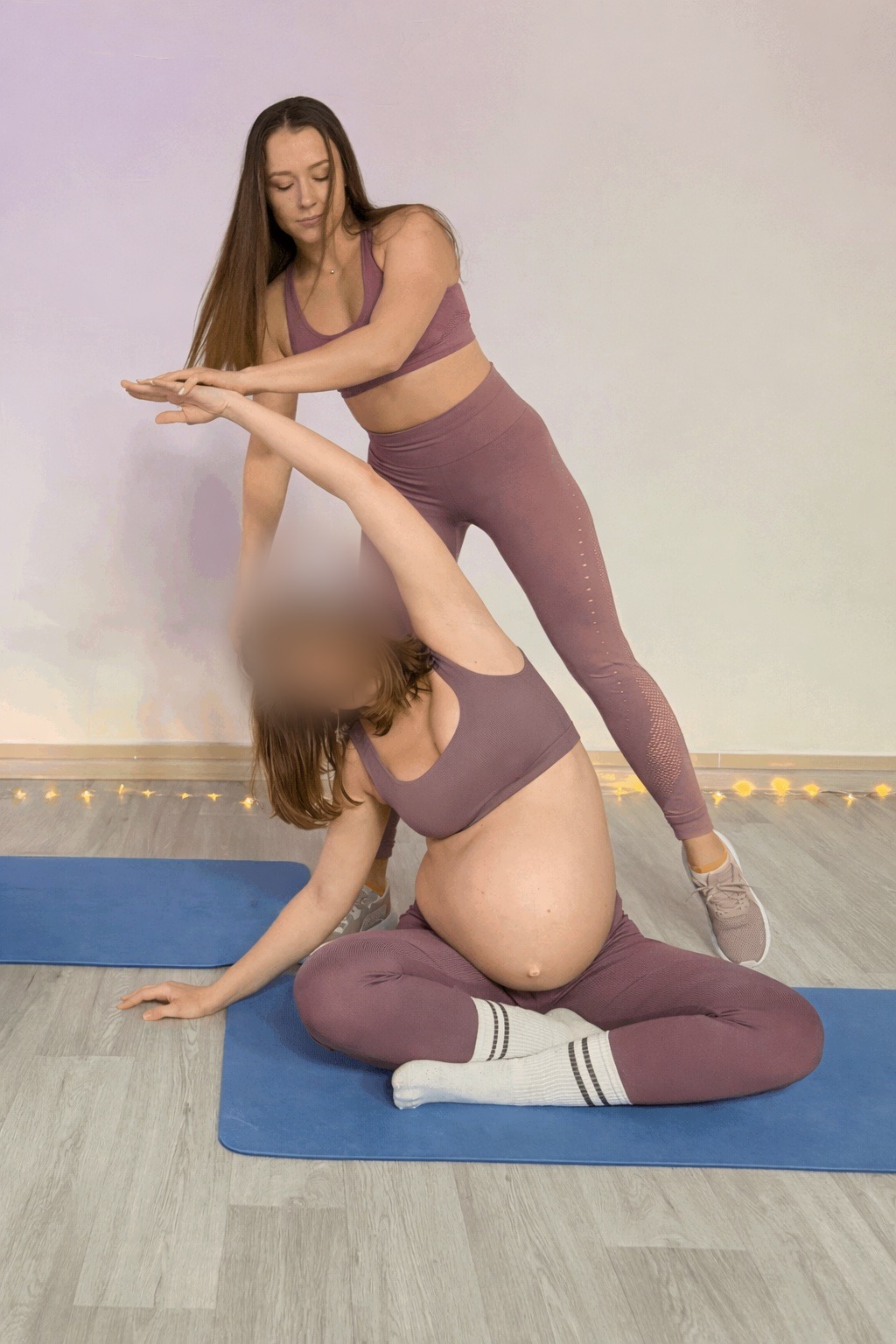
You cannot close diastasis with tape, cinch the belly or lose weight with it – but you can offload the lower back and make movement feel lighter. I tape pregnant and postpartum clients in my sessions, so here is an honest breakdown: where kinesiology tape helps, where it is useless and why you should not apply it from a picture on the internet.
What kinesiology tape is
Kinesiology tape is an elastic cotton strip on an adhesive base. It stretches roughly like skin and stays on the body for several days without interfering with washing or moving. Unlike rigid sports tape, which locks a joint in place, kinesiology tape immobilises nothing. It works gently: it slightly lifts and shifts the skin, giving the body extra feedback.
Honesty first. The evidence base for kinesiology taping is limited, and part of the effect is subjective. So I treat tape as pleasant support, not treatment – and suggest you do the same.
What tape actually does
Tape does not treat and does not close diastasis, but there are three things it genuinely helps with.
It offloads. The strip takes over part of the load from the lower back and lower belly – moving becomes easier, especially when the bump is already big.
It reminds you of your body. The skin feels the tape with every movement, and the body remembers to hold the back and gently draw the belly in. Less collapsing into the lower back means less fatigue there.
It supports where it is hard. On swollen legs tape works as light support instead of compression stockings – for a journey, for example. If swelling is your topic, there is a separate breakdown of when swelling during pregnancy is normal and when to see a doctor.
In my clients’ experience, walking and training feel easier with tape, the dragging feeling low in the belly and lower back is smaller, and the mood is steadier – when the body does not «hang» on its ligaments, daily life is simpler.
What tape does not do
This is where the main myths live. Tape:
- does not close diastasis – the gap is closed by the transverse abdominis working, not by a strip on the outside;
- does not remove the belly or fat – while the tape is on, the belly looks slightly more supported, but the volume returns after removal;
- does not replace training or a binder – it is temporary support, not a recovery programme.
If you expect weight loss or a flat belly from tape, disappointment is guaranteed. It is about «moving easier», not «changing the body».
Tape for diastasis after birth
This is the most common question, so it deserves its own section.
With diastasis, tape is supportive help, not a way to close the gap. Kinesiology tape gives the skin light tactile feedback: it does not pull the muscles together, but through the day it helps you remember the gentle draw-in and takes some load off the linea alba.
When tape makes sense: with a pronounced gap in the first weeks, as support in daily life and with dragging sensations in the lower back. When it is useless: as a replacement for exercise or for the sake of a «tighter» belly.
The gap itself is closed by the transverse abdominis – the full protocol with exercises by degree is in Diastasis recti after childbirth: exercises. And how tape differs from a binder – in Postpartum belly binder.
Tape in training
In a session tape solves one task – removing excess load so the movement is easier and safer. When the lower back and lower belly are slightly offloaded, it is easier to hold technique and not collapse into an arch. This is especially noticeable in the second and third trimester, when the weight of the bump is already changing posture.
The frame matters. Tape helps you do the exercise, but the muscles do the work. Applying a strip and not training the deep muscles means taking the tape off and being back where you started. So in training, tape goes together with breathing and deep-core activation – not instead of them.
Where tape helps during pregnancy
I most often use tape in these situations:
- the lower back drags under the weight of the growing bump;
- gentle belly support is needed for long walks or standing;
- the pubic bone hurts with symphysis dysfunction – tape slightly stabilises the pelvis and stepping becomes easier (the full exercise protocol is in Symphysis pain in pregnancy: exercises);
- the legs swell and a light alternative to compression stockings is wanted.
This is support, not treatment. If the pain is strong and interferes with walking and sleep, tape does not replace a doctor’s visit – mention it to your OB-GYN separately.
From what week of pregnancy tape is used and which patterns exist
Tape in pregnancy is usually started in the second trimester, around week 16–20, when the bump already pulls on the lower back. In the first trimester there is no point: the load is still small and the belly skin is not yet stretched. In the third trimester tape is needed most often – these are the hardest weeks for the back and pelvis.
There are only a few patterns, and each has its own job:
- The «fan» or «spider» on the belly – several strips spread from the lower belly upward and outward, like a support from below. This is the pregnancy belly tape from the pictures: the bump feels slightly «lifted», walking is easier.
- Two strips along the lower back – the most common pattern among my clients: it eases the dragging feeling in the lower back on long walks and when working standing up.
- A cross over the pubic bone – with symphysis dysfunction, it slightly stabilises the pelvis and the step becomes steadier.
- A strip from the foot up the shin – for swelling, as a gentle one-day alternative to compression.
Which pattern to use, with what tension and in which direction is decided by a specialist after an assessment. The same strip applied «upward» or «downward» works in opposite ways, so a pattern from a picture without a specialist’s hands is a lottery.
How long tape lasts, how to remove it and whether it is allowed after a C-section
One application lasts 3 to 5 days. You can shower and train with it; just do not scrub it with a sponge or blow-dry it. If an edge starts peeling, trim it carefully, but do not re-stick it.
Remove tape in the shower, in the direction of hair growth, slowly and holding the skin with your other hand. A drop of oil over the tape 10 minutes before removal makes it gentler. Never rip it off – belly skin during pregnancy and after birth is especially sensitive.
After a C-section, tape goes on the belly no earlier than your doctor allows, and only around the scar – on healed skin. In the first weeks it is still support, not a way to «cinch» the belly: the scar is left alone and nothing is stuck onto it. If you need support when standing up and walking in the first days, that is what a binder is for, not tape. What suits recovery after surgery is covered in recovery after a C-section.
Who should apply the tape
During pregnancy, tape is applied by a specialist: a trainer certified in taping, a physiotherapist or a rehabilitation specialist. This is not a whim. The strip has a direction and a tension, and they decide whether it offloads the right area or pulls tissues the wrong way. On the belly this matters most.
«Do it yourself from a picture» patterns from the internet are not suitable for pregnancy. At best such tape is simply useless, at worst it pulls the belly the wrong way. Let a specialist show the first application; after that you can repeat it under their guidance.
Safety
Tape looks harmless, but during pregnancy a few rules are mandatory:
- agree any load and support during pregnancy with your doctor;
- before the first application do a skin test: apply a small piece for 24 hours and check for itching or redness;
- do not tape over irritated skin, moles or fresh scars;
- if it burns, tingles or discomfort grows underneath – remove it immediately.
In short
Kinesiology tape during pregnancy and in training is supportive help. It offloads the lower back and belly, makes movement easier and gently reminds the body about posture. It does not close diastasis, does not remove the belly and does not replace muscle work. During pregnancy it should be applied by a specialist and only with your doctor’s approval.
This article was also published in my blog on T-Zh (in Russian): Taping during pregnancy and in training.
Anastasia Nikolskaya is a perinatal fitness trainer. I use taping as a supportive tool in sessions – in person in Samara and online across Russia.
This article is for informational purposes and does not replace medical advice. Agree the use of tape during pregnancy with your OB-GYN.