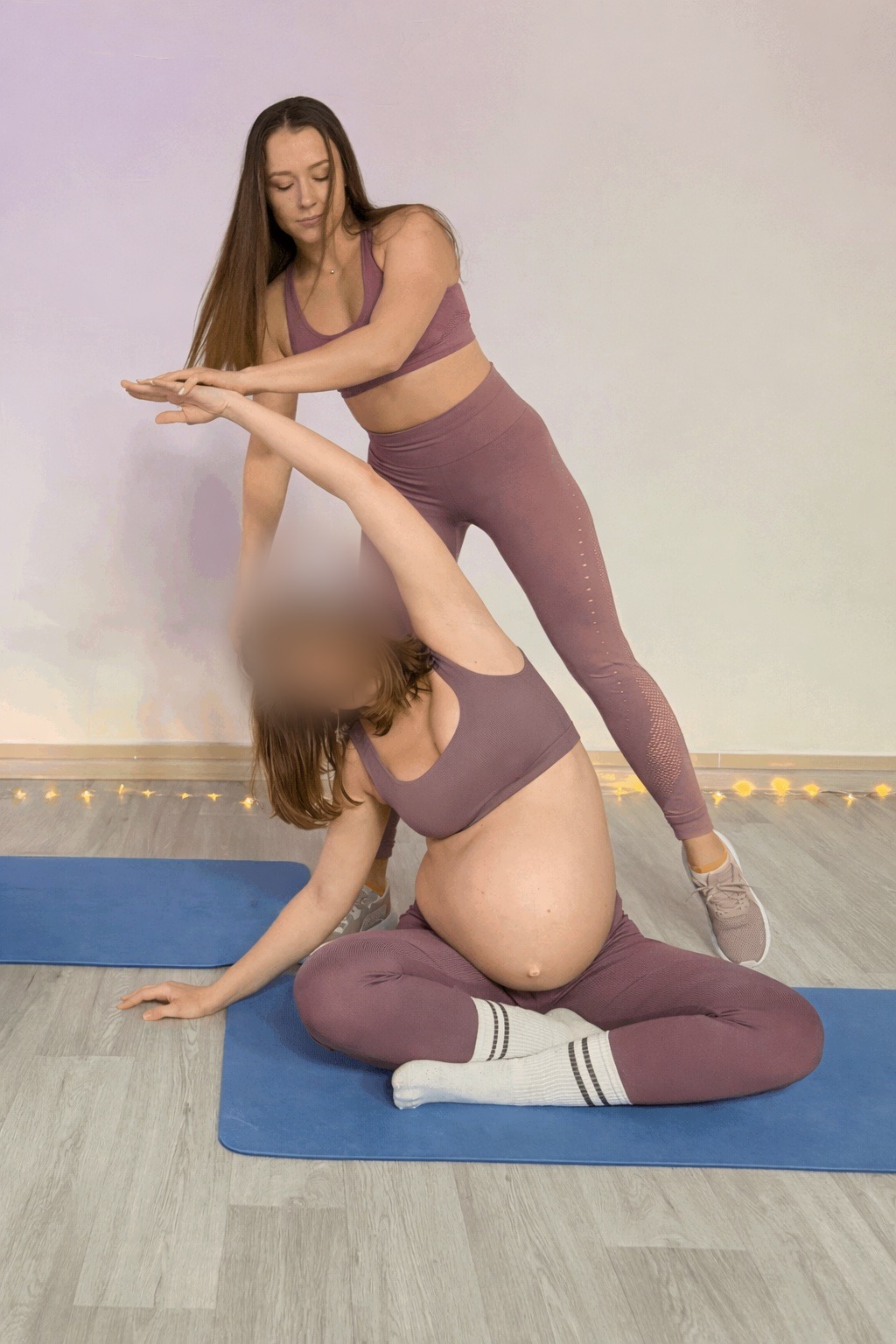
In brief. Postpartum recovery is not “fine after 6 weeks” but a long path in stages, each with its own set of sensations and allowed actions. Weeks 1-2: maximum rest, diaphragmatic breathing, short walks at home, no training and no lifting heavier than the baby. Weeks 3-6: walking, gentle pelvic floor activation, longer walks outdoors. After 6 weeks and a doctor’s check (absent complications): deep core muscles, transverse abdominis, gradual mobility, no crunches or planks. Months 3-6: modified plank, basic strength with light weights, continued work on diastasis and pelvic floor; running is possible from 6 months with a healthy pelvic floor. After 6 months: full training when diastasis has closed and recovery is good. After a C-section each stage shifts by 2-3 months: each layer was incised, healing happens inside and out. The main mistake is trying to speed up the process: this usually results in fatigue, injury, and disappointment.
Full recovery after vaginal birth typically takes 3-6 months of consistent work, after a C-section 6-12 months – and this is not falling behind social media, but the real pace of deep-tissue healing.
Why understanding the stages matters
After childbirth, the body begins a long journey back – but not to “what was before”, rather to a new balance. This process takes months, and trying to speed it up usually backfires: fatigue, injury, disappointment.
One of the main issues is the lack of clarity about what is normal at each stage. When you do not know what to expect, any sensation triggers anxiety: “Why is my belly still soft?”, “Why am I so tired from a simple walk?”, “When can I finally train properly?”
This article is a detailed week-by-week guide. Not a strict schedule but a map of the terrain: what usually happens, what you can do, and when to move to the next stage. Important: pace of recovery is individual – some move faster, some slower, and both are normal.
Weeks 1-2: time for rest and first steps
The first two weeks postpartum are a period of maximum recovery. The body has just gone through a huge process, and its main task now is healing.
What is happening in the body:
- The uterus starts to contract. You may feel cramping, especially during breastfeeding – this is normal.
- Lochia (postpartum discharge) – heavy at first, gradually decreasing.
- The perineum may be sore, especially with tears or an episiotomy.
- Fatigue – deep, all-consuming. Sleep loss, hormonal shifts, physical recovery – all of this needs resources.
- Swelling is possible, especially if IV fluids were given during birth.
What you can do:
- Breathing. Diaphragmatic breathing – a soft inhale with rib expansion, a calm exhale. This is the first exercise you can start in the first days. It helps build the connection with the deep core muscles and pelvic floor.
- Short walks at home. Not marathons – just stand, walk around, sit. Movement supports circulation and reduces the risk of clots.
- Rest. This is not laziness or weakness. This is the main “training” of the first two weeks. Sleep when the baby sleeps. Accept help. Do not try to “get it all done”.
- Support if needed. After a C-section, with symphysitis, or a sense of heaviness low in the belly, a postpartum belly binder is appropriate in these weeks – 2–4 hours under load, not around the clock. A healthy woman after a vaginal birth does not need one.
What you should not do:
- No targeted training.
- No lifting (apart from the baby).
- Avoid long standing or walking.
- Do not compare yourself with someone who “was running a week after”. That is either an exaggeration or a mistake.
Weeks 3-4: gentle activation
By weeks 3-4 most women start to feel a little better. Acute pain recedes; at least a minimal rhythm with the newborn appears. This is the time for the first intentional steps toward recovery.
What is happening in the body:
- The uterus continues to contract, but soreness fades.
- Perineal healing continues. If there was a scar after a C-section – it is still healing.
- Hormonal background is unstable. Mood swings, tearfulness, anxiety – normal, linked to the sharp drop in progesterone and oestrogen.
- The pelvic floor is still weak. Episodes of leakage with coughing, sneezing, or laughing are possible.
What you can do:
- Kegel exercises. Gentle pelvic floor contractions – short (2-3 seconds) and long (5-8 seconds). Start with a small count and increase gradually. More in Pelvic floor after childbirth.
- Walks outdoors. 10-20 minutes at a calm pace. Fresh air and movement help both physically and emotionally.
- Continuing breathing work. Add coordination of breath with transverse abdominis activation: on the exhale – a gentle drawing in of the lower belly.
- Gentle stretching. Neck, shoulders, thoracic spine – zones that suffer from feeding and carrying the baby. Simple head turns, chest opening, side bends.
What you should not do:
- Run, jump, lift weights.
- Do abs (crunches, planks – not yet).
- Ignore pain signals. If something hurts – that is information, not “laziness”.
Weeks 5-6: doctor’s check – the key point
Week 6 is the traditional point for the postpartum check-up with the gynaecologist. This is not just a formality – it is the moment when the doctor assesses how healing is going and gives (or withholds) clearance for increased physical load.
What is important to discuss with the doctor:
- Scar state (if C-section or tears).
- Presence and degree of diastasis recti.
- Pelvic floor state – any symptoms (leakage, heaviness).
- Overall and emotional state.
- Readiness for a gradual increase in physical load.
What you can do after the doctor’s approval:
- Extend walks to 30-40 minutes.
- Begin targeted core work: transverse abdominis activation in different positions (lying, on all fours, standing).
- Add bodyweight exercises: gentle squats, hinges, calf raises.
- Continue pelvic floor work, gradually increasing hold time and reps.
Important: the doctor’s check is a necessary but not sufficient point. “You can exercise” from the doctor is clearance, not a specific programme. A trainer helps translate that clearance into specific exercises with the right dosage.
Weeks 7-12: starting targeted training
This is the period when most women begin to feel ready for more than walks. And indeed they are – provided previous stages have been completed, the doctor has cleared them, and the body responds adequately.
What you can include:
- Strength work with light resistance. Bands, light dumbbells (1-3 kg), bodyweight. Squats, short controlled lunges, rows, presses standing or seated.
- Quadruped work. Cat-cow, adapted dead bug, opposite-arm-and-leg lifts – all of this strengthens the deep core without excess pressure.
- Bridge. On two feet, lying on the back with knees bent. Gentle pelvic lift on the exhale with glute and pelvic floor activation.
- Stretching and mobility. Shoulders, thoracic spine, hips – zones that particularly need attention from carrying and feeding the baby.
What to keep in mind:
- Watch for symptoms. If exercise produces a sense of downward pressure, leakage, or a dome on the belly – reduce the load.
- Do not force. One bad day is not a reason to be upset. Just lower the load and come back when ready.
- Breastfeeding affects energy and joints (relaxin keeps being produced). Take this into account when choosing load.
Frequency: 2-3 times a week for 30-40 minutes is a good guide for this period.
Months 3-6: gradual progression
By the third month postpartum, the body is usually ready for a more noticeable increase in load. This does not mean “back to what was” – it means building a new base, taking into account everything the body has been through.
What you can add:
- Increased weight in strength work. Gradually, with technique and breath control. If you cannot breathe freely – the weight is too high.
- More complex exercise variations. Walking lunges, dumbbell squats, bent rows, standing presses.
- Cardio. Brisk walking, elliptical, stationary bike. Running – only if the pelvic floor has recovered and there are no symptoms (leakage, heaviness). For many women, return to running happens no earlier than 4-6 months.
- Plank. Start with short holds (10-15 seconds), watching that the belly does not sag and no dome appears.
What to keep in mind:
- Progression should be gradual. Do not skip stages. Each week – a small increase, not a sharp jump.
- Sleep, food, and overall stress still affect recovery. If the baby is not sleeping at night – training can be lighter or skipped. That is not a regression but common sense.
- If you have diastasis, continue targeted work. More in Diastasis recti after childbirth: exercises.
Individual variation: why timelines are a guide, not a law
Everything described above is the typical trajectory. But reality can differ – and that is normal. A few factors that influence pace:
- Type of birth. After a C-section, core recovery starts later and progression is usually slower.
- Breastfeeding. Hormonal background differs while nursing – relaxin keeps being produced, joints stay less stable, energy may be lower.
- Number of pregnancies. After a second and later pregnancies, recovery may take longer.
- Previous fitness level. Women who trained before and during pregnancy usually recover faster – but timelines are still individual.
- Sleep quality and support. If you are not sleeping and managing alone – the body recovers more slowly. Not a reason for guilt, a reason to be kinder to yourself.
- Complications. High-grade tears, infections, postpartum depression – all of this affects timelines and needs specialist attention.
The main principle: move at your own pace, listen to the body, do not compare yourself to others. Recovery is not a race – it is a process.
Key markers: what counts as progress
Sometimes progress is hard to notice while you are in it. Here are specific markers that show recovery is happening:
- You can cough and sneeze without leakage.
- You can lift the baby without a sense of pressure or pain in the belly.
- No dome on the belly during exercises.
- You can walk for 30 minutes without marked fatigue.
- Lower-back or pelvic pain has reduced or gone.
- You feel control of the pelvic floor – you can contract and release consciously.
- You have enough energy for daily life without full depletion by evening.
If at least a few of these are not yet there – not a reason to be upset, a reason to keep working and perhaps see a specialist.
How to start recovery with support
Postpartum recovery is a process where it is easy to get lost: too much information, conflicting advice, inflated expectations. Working with a trainer helps you structure the process and move consistently, without skipping stages and without overloading.
At the intro session we look at your situation: how long since birth, how it went, how you feel, what your goals are. We identify the stage you are at and build a plan for the coming weeks. Intro session – from 1,400 rubles (online). I work in Samara and online.
More on the recovery programme on the After childbirth page. On pelvic floor work – in Pelvic floor after childbirth. On diastasis – in Diastasis recti after childbirth: exercises.
Related: back pain after birth – exercises from week one, stage by stage.