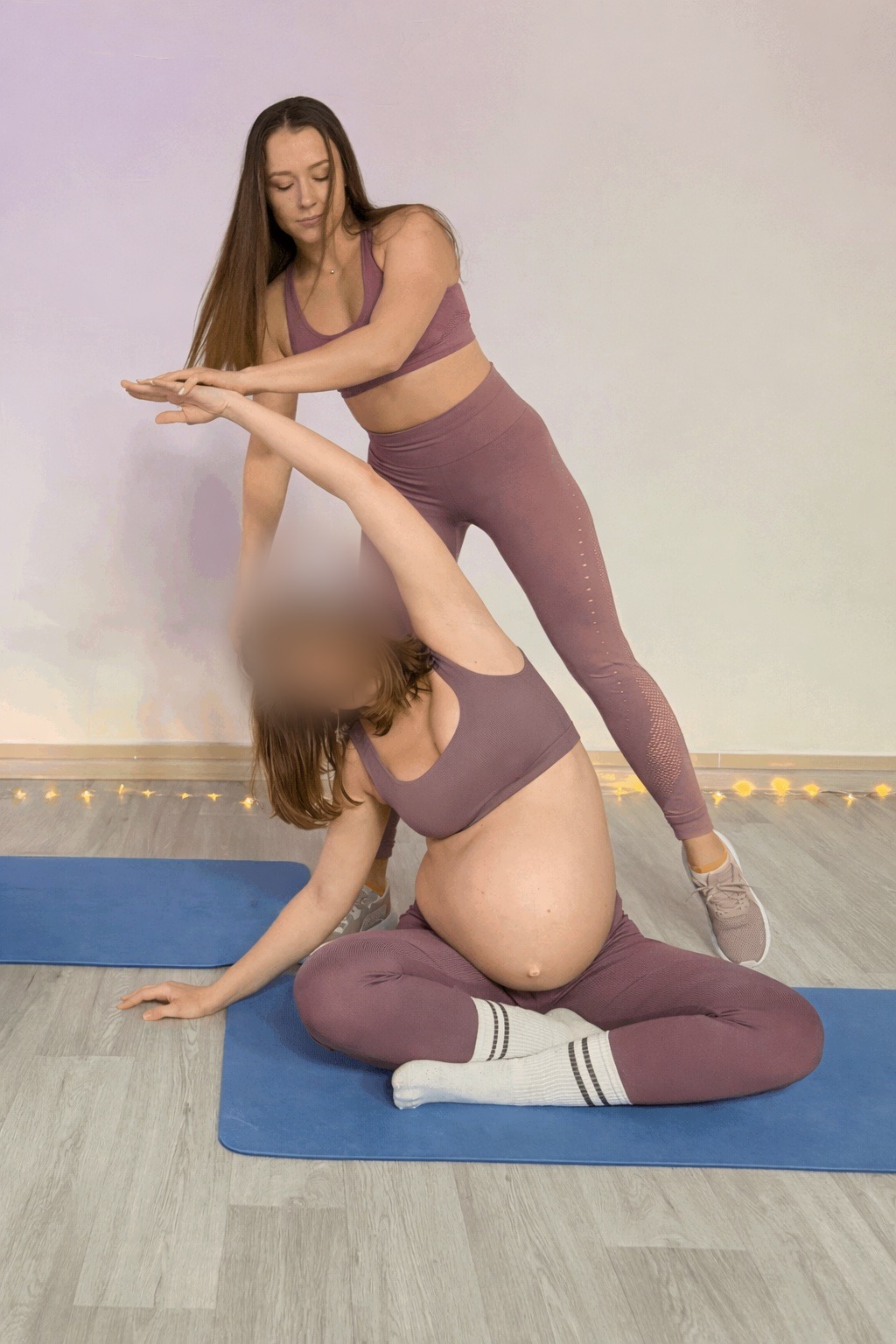
Why general timelines do not apply after a C-section
After a C-section, the body recovers differently than after a vaginal birth. It is abdominal surgery – involving incisions through several layers of tissue, including the abdominal wall and the uterus. Healing happens not only on the surface but internally, and takes considerably longer than the external scar might suggest.
Advice like “you can start after 6 weeks” is common online, but it is not a universal rule. Six weeks is a guideline for a medical check-up, not automatic clearance for any type of exercise. Actual readiness depends on many factors: how the surgery went, whether it was planned or emergency, how healing is progressing, and your overall condition – sleep, energy, level of fatigue.
What affects the timeline
There is no universal schedule. But there are specific factors that determine when and how you can begin moving:
- Type of C-section. Planned and emergency sections are different situations. Emergency surgery often occurs under stress and exhaustion, which affects overall recovery.
- Scar and tissue condition. The external scar may look healed, but deeper layers take longer to recover. This matters for any load involving the core.
- Sensations during movement. Pulling sensations, numbness, or discomfort around the scar are a normal part of the process – but they determine what is currently appropriate and what is too early.
- Overall wellbeing. Sleep, energy levels, emotional state – these are not secondary factors. The body recovers as a whole, not in isolated parts.
- Medical clearance. Examination and clearance from your doctor is the mandatory starting point. A trainer can select appropriate exercises, but cannot assess internal tissue healing. Without medical clearance, it is best not to start.
Where people usually begin
The first steps after a C-section are not workouts in the traditional sense. They are work at the level of breathing, gentle activation, and restoring basic functions.
Breathing. Restoring diaphragmatic breathing is one of the first priorities. During pregnancy and after surgery, breathing patterns change – returning to them helps restore core and pelvic floor function.
Gentle core activation. Not crunches or planks. Calm, controlled movements that help the body reconnect with deep muscles – without pressure on the scar area.
Pelvic floor work. After a C-section, the pelvic floor also needs attention – it carried load throughout pregnancy, even if delivery did not happen vaginally.
Gradual progression. Increasing load is based on how the body responds, not on a calendar schedule. Each next step comes only when the previous one is tolerated without discomfort. This does not mean “do nothing for months” – it means moving at your own pace, not someone else’s.
Important: even these gentle steps should begin only after a medical examination and clearance. Walking and breathing are one thing; targeted core work is another.
What a trainer does and what a doctor does
These are different roles, and it is important not to confuse them.
A doctor assesses medical readiness: scar condition, tissue healing, absence of complications. They give clearance for physical activity and define restrictions.
A trainer works within that clearance: selecting exercises, managing load, monitoring technique and how you feel during the session. A trainer does not diagnose conditions or replace a doctor. If something raises questions, they refer you to the appropriate specialist.
A good trainer starts with questions: when was the surgery, how did it go, what does your doctor say, how are you feeling. Only after that can we talk about exercise.
These roles complement each other but do not substitute for one another. If a trainer says “no need for a doctor, I can assess everything myself” – that is a warning sign. If a doctor says “you can exercise” but does not specify how – a trainer helps translate that clearance into specific exercises and dosage.
What to avoid
There are several common mistakes to avoid in the early stages after a C-section:
- Intense abdominal training – especially crunches and sit-ups. They create pressure on tissues that have not fully healed.
- Jumping, running, high-intensity intervals – until the body is ready for impact loads, these can do more harm than good.
- Comparing your timeline to others. “She was running again after two months” is not a benchmark. Every body recovers at its own pace.
- Ignoring discomfort. If movement causes pain, heaviness, or a sensation of pressure – that is a signal to stop and reassess, not to “push through.”
- Trying to combine recovery with a rigid schedule. The body after surgery does not work on a timetable – one week may feel good, the next may be harder. That is normal.
- Treating a binder as a substitute for the work. A binder can support you in the early weeks but does not replace muscle recovery; see the timing and rules in the guide on the postpartum belly binder.
When it makes sense to work with a trainer
If your doctor has cleared you for exercise but you do not know where to start or how to structure the process – that is a good time to work with a trainer. Not to “get your body back quickly,” but to move safely, understanding what is happening at each stage.
This is especially relevant after a C-section, where standard “postpartum recovery” programmes often do not account for the specifics of surgery. Working with a trainer who understands this difference helps build a path adapted to your specific situation – considering the timing, type of surgery, sensations, and current wellbeing.
More about how postpartum work is structured on the After childbirth page. About the approach to safety and load adaptation – in the Safety and approach section.
This topic is also covered in my blog on T-Zh (in Russian): Recovery after a C-section: a realistic week-by-week training plan.