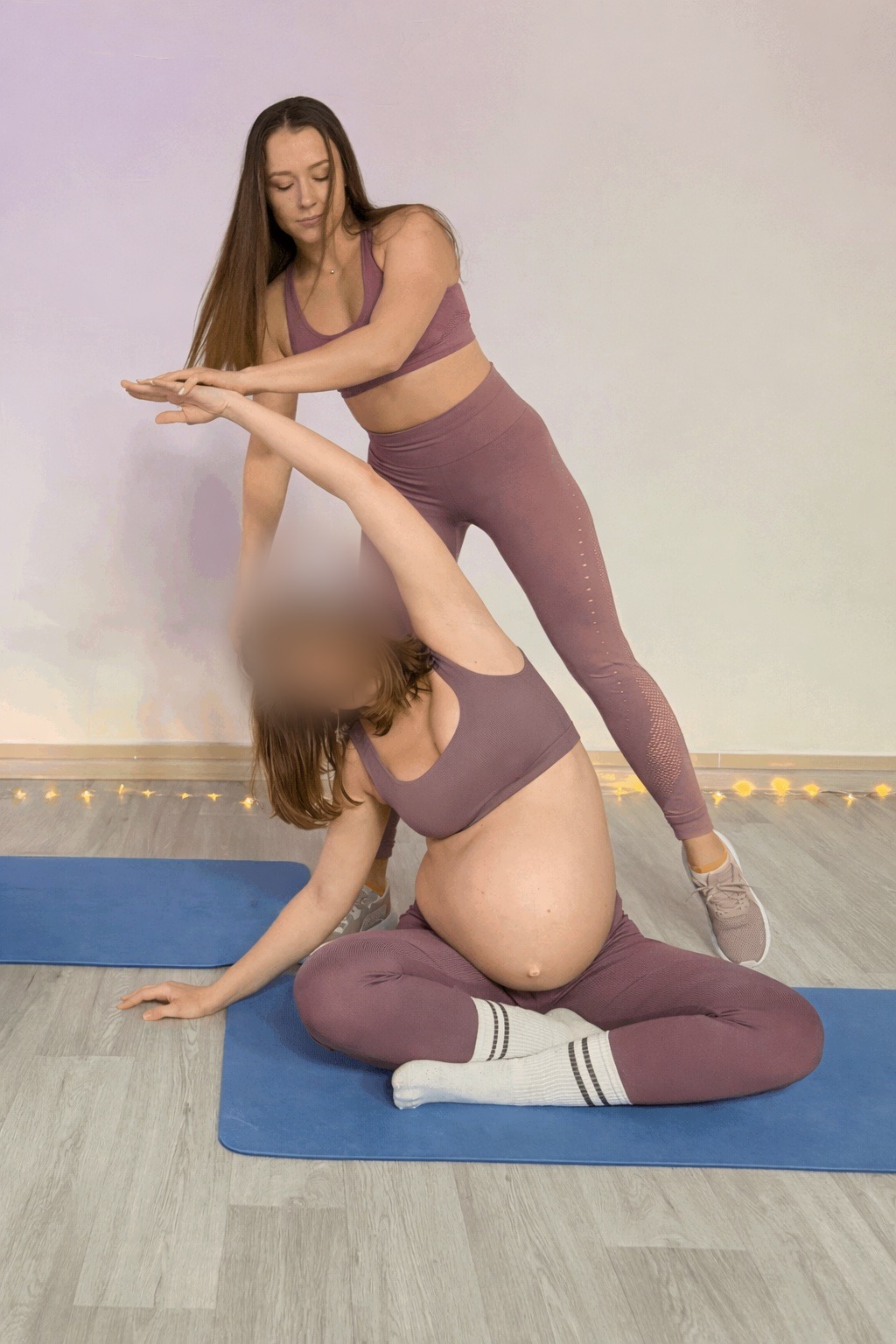
Why a gentle start matters
After childbirth, your body needs time to recover. This applies not only to the physical state, but also to the emotional one: fatigue, a new rhythm of life, and a changed sense of your own body. Trying to “get back in shape” too quickly often leads to the opposite effect.
A common misconception is that it is enough to simply “start training like before.” But the postpartum body works differently: posture, muscle tone, and recovery capacity have all changed. What matters is not just starting, but how the training is structured.
When can you start
There is no universal answer. Much depends on how the birth went, how you feel, and what your physician recommended. For some, it is 6 weeks. For others, it may be several months. You can read more about this in the article on when to start returning to activity after childbirth.
Important: the decision to begin training is best made together with your doctor, especially if there were complications or a C-section.
A realistic recovery timeline
Every recovery is individual, but having a general idea of what each phase typically looks like can help set expectations and reduce the pressure to rush.
The first six weeks (0 to 6 weeks). This is the early recovery period. The body is healing, hormones are shifting, sleep is disrupted, and daily life with a newborn is already a significant physical task. During this time, the focus is on rest, gentle walking when you feel up to it, and breathing exercises. This is not a “rest period before the real work starts” – it is recovery itself, and it matters.
Six to twelve weeks. After your doctor has examined you and given clearance, you can begin to introduce gentle, intentional movement. This might include pelvic floor activation, basic core engagement, and light mobility work. The emphasis is still on reconnecting with your body, not on performance. Sessions are short, and the pace is dictated by how you feel – not by a schedule.
Three to six months. If the earlier stages went well and you feel ready, this is typically when load can begin to increase gradually. Strength exercises, longer walks, and slightly more structured training become appropriate. But the progression should still be smooth and responsive. If something feels off, slowing down is not a setback – it is the right decision.
Six months and beyond. For many women, this is when training starts to feel more like training again. But even here, the approach should account for the postpartum context: sleep quality, breastfeeding, energy levels, and how the core and pelvic floor are functioning. There is no fixed “finish line” for recovery – it is a gradual process that looks different for everyone.
These timelines are guidelines, not rules. Some women move through them faster; others need more time. Both are normal.
Where to start
Breathing and body awareness
The first step is not load, but reconnecting with your body. Breathing practices, gentle core activation, and pelvic floor awareness form the foundation for everything that follows. This is not a “warm-up before the real workout” – it is a full and important stage of recovery.
Pelvic floor and core attention
After pregnancy and childbirth, the pelvic floor muscles and deep core muscles need focused attention. Diastasis, posture changes, and a feeling of instability in the core all require careful work, not standard ab exercises.
No comparisons
Every postpartum journey is individual. Comparing yourself to others or to your “previous shape” leads to frustration. What matters more is understanding what your body needs right now.
Gradual progression
Increasing load should be smooth and based on how you feel, not on a fixed schedule. A good specialist helps build a route, not push toward a result.
Diastasis recti – what it is and why to check
Diastasis recti is a separation of the left and right sides of the rectus abdominis muscle – the “six-pack” muscles that run vertically along the front of the abdomen. During pregnancy, as the belly grows, these muscles stretch and the connective tissue between them widens. This is a normal adaptation. For many women, the gap closes on its own in the weeks and months after childbirth. For others, it remains and needs attention.
Why does it matter? Because a significant diastasis affects how the core functions. It can contribute to lower back pain, a feeling of weakness or instability in the midsection, and difficulty with everyday movements like lifting your baby or getting out of bed. It also affects how the body handles pressure during exercise – which is why standard abdominal exercises like crunches can actually make things worse if diastasis is present.
Checking for diastasis is something your doctor or a specialist can do during a postpartum examination. It is a simple assessment – lying on your back, gently lifting your head, and feeling for the gap above and below the navel. Knowing whether diastasis is present and how wide it is helps shape the right training approach: which exercises to include, which to avoid for now, and how to rebuild core function safely.
This is not something to be afraid of – it is something to be aware of. Many women recover fully with the right exercises. The important thing is to check before jumping into core training, so that the program helps rather than hinders recovery.
Pelvic floor – why it matters
The pelvic floor is a group of muscles that support the bladder, uterus, and bowel. During pregnancy, these muscles carry increasing weight. During vaginal birth, they stretch significantly. Even after a C-section, the pelvic floor has been under sustained pressure for months. The result is that after childbirth, these muscles are often weaker, less responsive, or harder to connect with.
Why is this important for training? Because the pelvic floor is involved in almost every movement – walking, lifting, bending, coughing, laughing. When it is not functioning well, you might notice leaking during exercise or sneezing, a feeling of heaviness or pressure in the pelvic area, or difficulty controlling urgency. These symptoms are common, but they are not something to simply accept as the new normal.
Pelvic floor recovery starts with awareness: learning to feel and activate these muscles again. This is often more subtle than people expect – it is not about squeezing as hard as possible, but about finding a gentle, controlled engagement. Over time, as the connection improves, the exercises can become more integrated into broader movement patterns.
A specialist who understands postpartum recovery will include pelvic floor considerations in the program from the very beginning – not as a separate add-on, but as a core part of how every exercise is structured. If you experience persistent symptoms, consulting a pelvic floor physiotherapist is also a valuable step.
When to return to regular exercise
The question of when you can go back to your pre-pregnancy activities – running, group fitness, weight training, sports – comes up often. The honest answer is: when your body is genuinely ready, not when you feel impatient.
A few practical markers that suggest readiness for more demanding activity:
- Your doctor has given clearance for higher-intensity exercise
- You can walk briskly for 30 minutes without discomfort or leaking
- Basic core and pelvic floor exercises feel controlled and stable
- You have been gradually increasing load for several weeks without setbacks
- Everyday tasks – lifting your child, carrying groceries, climbing stairs – feel manageable
Returning to running, jumping, or heavy lifting before these foundations are in place increases the risk of pelvic floor issues, injury, or simply hitting a wall that sends you back to the starting point. A gradual return may feel slow, but it builds a base that supports long-term progress rather than short-term frustration.
There is no shame in taking longer. The goal is not to race back to where you were, but to build forward from where you are now – at your own pace, with your body’s real signals as the guide.
What Anastasia Nikolskaya offers
In my work with women after childbirth, I begin with an intro session: reviewing the current situation, how you feel, any limitations – and building a personal route with a gentle start. Sessions are available in Samara and online, and the format and pricing are discussed at the intro session.
If you feel ready to begin but are not sure where to start, feel free to get in touch – I will help you find the right format.