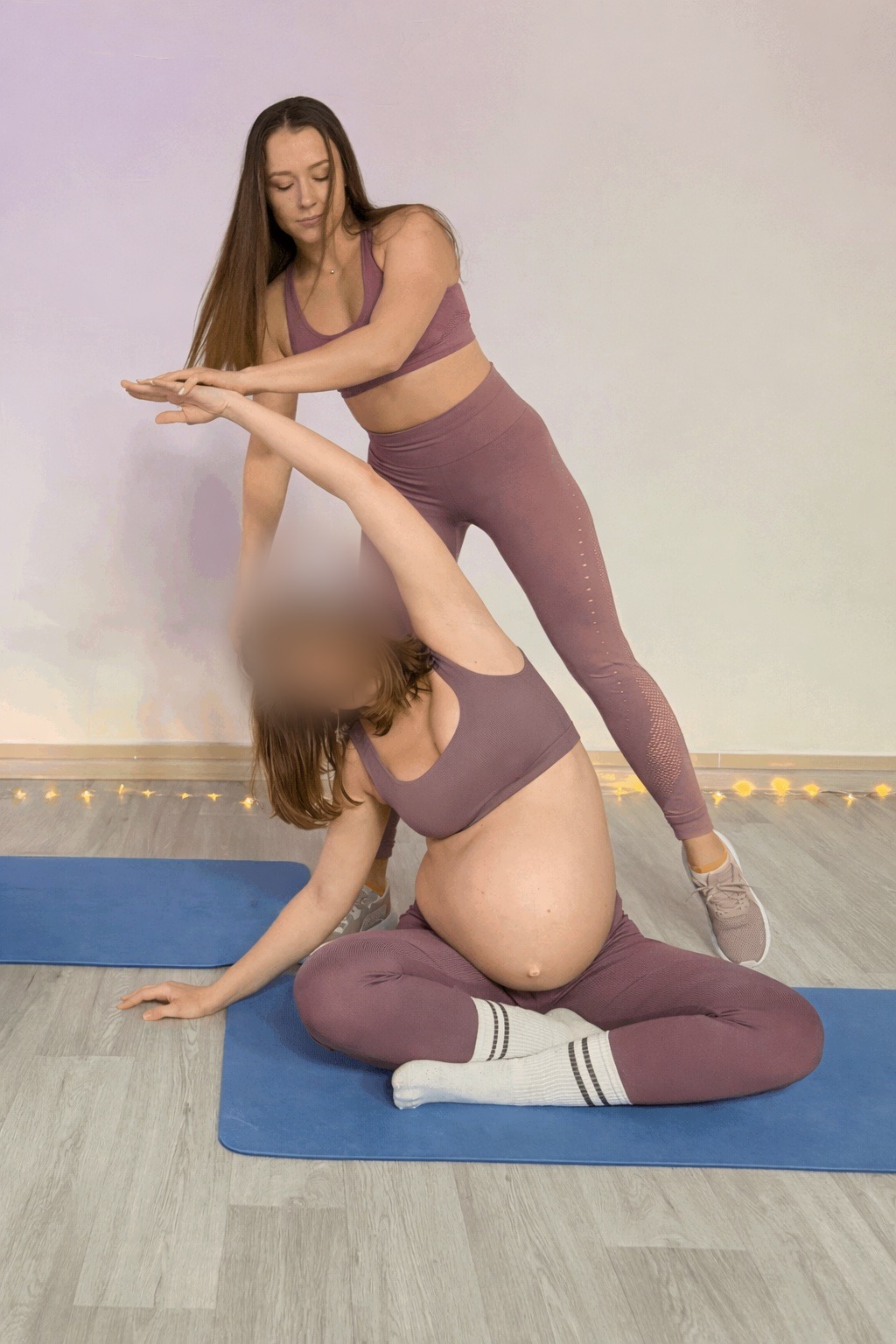
In short. Pregnancy after 35 is not a diagnosis – it is a different baseline of risk. Ligaments recover more slowly, muscle mass starts to decline (about 1% a year without training), insulin sensitivity drops, and the background risk of hypertension and gestational diabetes is higher. Regular moderate training is the strongest non-pharmacological tool in this situation: meta-analyses show a 30–40% reduction in gestational diabetes risk and a 25–35% reduction in preeclampsia risk. Current clinical guidelines recommend 150 minutes of activity per week; age in itself is not a contraindication. A programme after 35 is not built on lower intensity but on different emphases: strength work as a priority (to offset sarcopenia), attention to technique and recovery, no sharp ranges of motion or impact loads. You can start even without training experience – with walking, breathing and light strength work under a trainer who understands age-specific factors.
According to meta-analyses, regular training during pregnancy after 35 reduces the risk of gestational diabetes by 30–40% and preeclampsia by 25–35% – stronger than the effect of most diets.
Pregnancy after 35 is a topic surrounded by exaggerated fears and over-simplified advice. On one side – the “older first-time mother” label that makes it sound like a rare and dangerous case. On the other – content that says “age does not matter at all”. Reality is in the middle: after 35 the risk profile does shift, but this does not cancel a normal pregnancy and does not make a woman “deficient”. Well-structured training is one of the main tools for reducing age-related risks.
What changes after 35
Biologically, pregnancy after 35 has several specific features:
Ligaments. Ligaments are slightly less elastic than at 25. Relaxin softens them, but recovery after load is slower. That means sharp movements and large ranges of motion require more caution.
Muscle mass. After 30 women begin a natural decline in muscle mass (~1% a year without training). By 35 this is already meaningful: less muscle equals less support for the spine equals higher risk of back pain during pregnancy.
Cardiovascular system. The baseline risk of hypertension and cardiovascular problems is higher. Training is a protective factor.
Metabolism. Insulin sensitivity gradually decreases. The risk of gestational diabetes is higher. Regular physical activity is the most powerful non-pharmacological way to improve sensitivity.
Recovery. Sleep, lack of rest and stress show up in how you feel more strongly than at 25. Training should be built around quality, not quantity.
Why training matters especially now
Regular moderate training during pregnancy after 35 reduces the risk of:
- Gestational diabetes – by 30–40% according to meta-analyses.
- Preeclampsia – by 25–35%.
- Caesarean section – not by “avoiding the operation”, but through a smoother labour and a healthier pregnancy overall.
- Lower back pain – the main complaint of pregnant women after 35.
- Excessive weight gain – which puts extra strain on joints and the cardiovascular system.
- Postpartum depression – regular activity works as prevention.
A trained body also recovers faster after birth. After 35 this matters even more – the margin of resilience is smaller, and the quality of recovery strongly affects the years ahead.
What works
A programme after 35 does not differ dramatically from a standard pregnancy programme. The difference is in emphasis:
Strength work – becomes especially important. Not for “shape”, but for:
- Supporting the spine as the belly grows.
- Offsetting the age-related decline in muscle mass.
- Preparing for postpartum demands (carrying a baby, broken sleep, constant lifting).
Basic exercises: wall squats, band rows, glute bridge, side plank on the knee, dead bug with opposite arm and leg. 2–3 times a week for 30–40 minutes.
Cardio – essential. At least 150 minutes a week per current clinical guidelines. The best formats:
- Brisk walking – the most reliable.
- Swimming – ideal for joints and the pelvic floor.
- Elliptical – no impact.
- Stationary bike.
- Prenatal aqua aerobics.
Pelvic floor – regular breath and Kegel work. After 35 the pelvic floor recovers more slowly postpartum, and pre-birth preparation is especially important.
Mobility and stretching – controlled, without maximum range. Relaxin plus less elastic ligaments equals more caution with stretching.
What to leave out or strictly limit
All standard pregnancy contraindications become stronger:
- Jumps and impact loads. Ligaments are less elastic – injury risk is higher.
- Sports with a risk of falling – categorically.
- Heavy strength work with breath holding – risk of hypertension and uterine tone.
- Sudden changes of position – dizziness happens more often at 35+ due to shifting blood pressure.
- Overheating – hot yoga, sauna after training.
More on this: what to avoid during pregnancy.
Signs that need a doctor right away
In the 35+ group, on top of the standard stop signals:
- Rising blood pressure, especially if it was normal before pregnancy.
- Strong headaches.
- Vision changes.
- Sudden swelling of the face or hands.
- A drop in fetal movements in the second half of pregnancy.
These symptoms can point to early preeclampsia – one of the main risks of pregnancy after 35.
Lifestyle factors alongside training
Training is part of a system. After 35, these matter especially:
- Sleep 7–9 hours. Lack of sleep affects hormones and metabolism more strongly.
- Nutrition. Without strict restrictions, with a focus on protein (1.1–1.3 g/kg), enough vegetables, whole grains. The glucose tolerance test at 24–28 weeks is mandatory.
- Stress management. Chronic stress at 35+ affects blood pressure, sleep and hormones more than at 25.
- Vitamin D – often low. Check levels and supplement as advised.
Practical considerations
If you trained before pregnancy:
- First trimester – keep your routine, adjusted for how you feel.
- Second trimester – continue strength work, adjust cardio.
- Third trimester – reduce volume, focus on preparation for birth.
If you did not train before pregnancy:
- Weeks 1–2 – walking, breathing, basic activation.
- From week 2 – add light strength work.
- By week 12 – a full programme of 30–40 minutes, 3 times a week.
- Do not try to “make up for lost time” with intensity.
The psychological side
After 35, pregnancy is more often accompanied by anxiety – from external labels (“older mother”) and from internal “I am not what I used to be” thoughts. Regular training is a proven antidepressant and a way to regain a sense of control over the body. Thirty minutes of movement a day is not just physical load – it is also a pause from anxious thinking.
If there is strong anxiety, insomnia or apathy, this is a reason to see a doctor or psychologist. The risk of antenatal depression is higher after 35, and it should not be ignored.
Related materials
- Pregnancy fitness by trimester – the basic programme by trimester.
- What to avoid during pregnancy – contraindications.
- Preparing your body for pregnancy – especially relevant for planning after 35.
- IVF and fitness – often connected with the 35+ group.
- Training and fertility – preparing for conception.
After 35 it is especially valuable to work with a trainer who understands both pregnancy and age-specific factors. The programme is adapted to the current week, baseline fitness, medical restrictions and overall wellbeing. More on the format – “What is the intro session”.