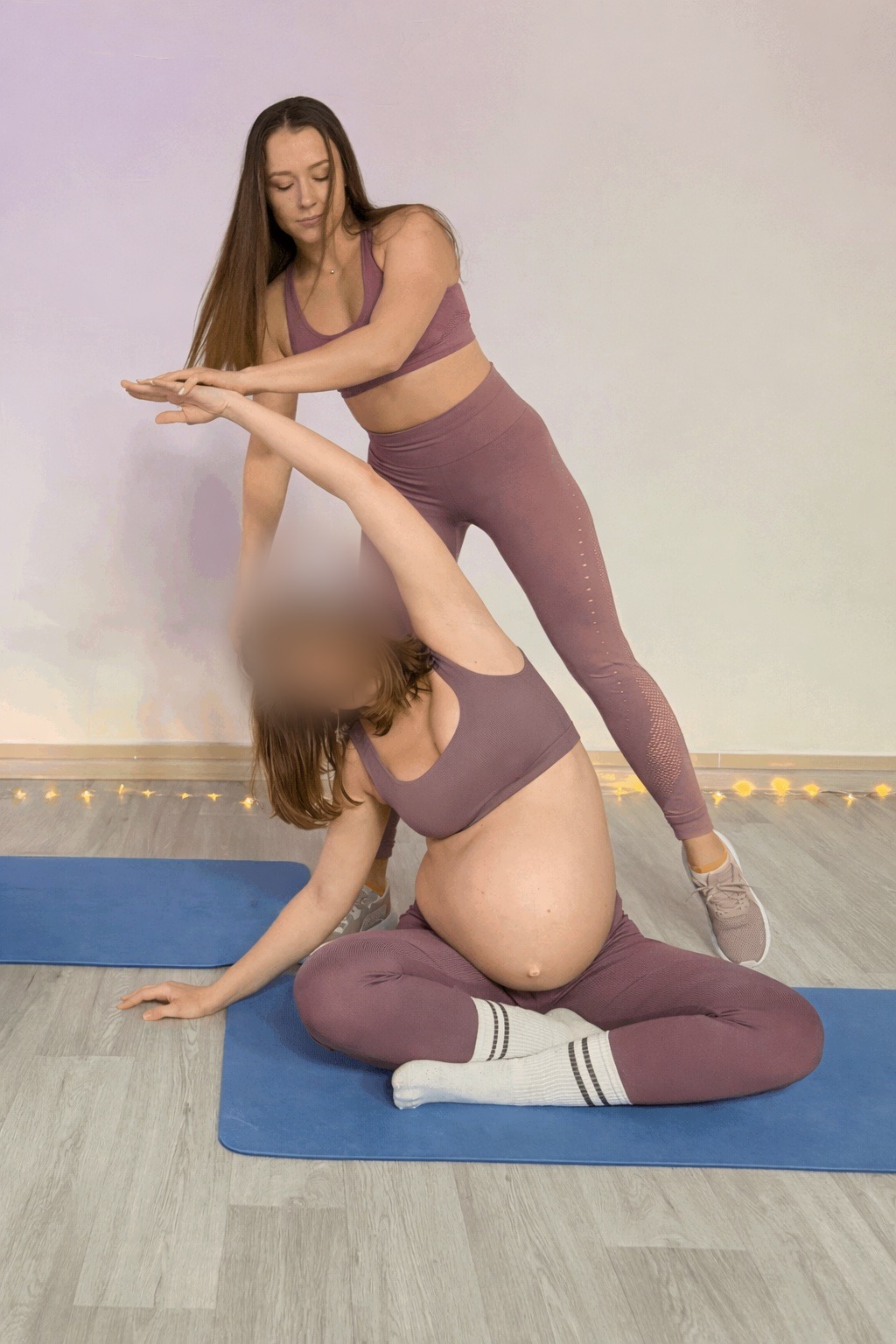
In short. Training during IVF is allowed, but the load is adapted to the protocol phase. Before and at the start of stimulation – usual training. From mid-stimulation, twists, jumps and heavy strength work are removed: the ovaries enlarge 2–3 times, and sharp movements create a risk of torsion. After egg retrieval – gentle work for 7–10 days. From embryo transfer to a confirmed pregnancy – only walking, breathing, gentle Kegel, no sauna or hot baths. The ideal activity corridor when preparing for IVF: 3 times a week for 30–45 minutes of moderate load. Meta-analyses show that a BMI below 18.5 or more than 4 hours of high-intensity training per week reduce the chances of a successful protocol. The ideal BMI range is 20–24, and it is better to normalise weight before starting, not during. After a positive test, the first 12 weeks need more caution than a natural pregnancy: until heartbeat is confirmed, many reproductive specialists fully restrict impact loads.
In IVF, a BMI outside 20–24 significantly reduces the chances of a successful protocol, and more than 4 hours of high-intensity training per week works against fertility – normalising weight before starting usually gives more than any “lucky” stimulation programme.
IVF is not just a medical procedure but also a serious physical load on the body. Hormonal stimulation, enlarged ovaries, emotional stress – all of this changes the rules. Training during this period helps rather than hinders, but only when it is adapted to the phase.
This article sets out what is allowed and what is not at each stage of the IVF cycle, drawing on current clinical guidelines and systematic reviews.
Contents
- Preparation: 2–3 months before the protocol
- Stimulation: what changes
- Egg retrieval: recovery
- Between retrieval and transfer
- After transfer: two weeks of waiting
- Positive test: the first trimester
- Negative test: returning and preparing for a new cycle
- What matters more than training
Preparation: 2–3 months before the protocol
This is the most productive stage of work with the body. Before the protocol there are no hormonal restrictions, no fear of “what if I damage something” – the body can be prepared properly.
Goals of preparation:
- Normalising weight (BMI 20–24)
- Stabilising the cycle if there are irregularities
- Strengthening the pelvic floor and deep core
- Reducing chronic stress and improving sleep
What works:
- Strength training 2–3 times a week, moderate intensity
- Non-impact cardio 2 times a week (walking, swimming, cycling, elliptical) for 30–45 minutes
- Pelvic floor: Kegel and reverse Kegel daily for 5–10 minutes
- Diaphragmatic breathing – the base for everything else
More on this – preparing your body for pregnancy and Kegel exercises before pregnancy.
What to exclude 2–3 months before the protocol:
- High-intensity interval training (HIIT) more than 2 times a week
- Running more than 30 kilometres a week (for regular runners)
- CrossFit with heavy weights
- Strict diets with a deficit of more than 500 kcal
RED-S (relative energy deficiency in sport) is the relative energy deficit syndrome in athletes. It disrupts the cycle and lowers fertility. If you train intensively and your cycle is irregular, the load needs to come down and food intake needs to go up.
Stimulation: what changes
Stimulation is the hormonal phase during which the ovaries grow actively. By the end of stimulation they may be 3–5 times larger, sometimes more. This changes the anatomy of the pelvis and creates a risk of ovarian torsion with sharp movements.
What changes in training:
- First 3–5 days of stimulation: usual programme, including strength work. The ovaries are still small.
- From day 5–7 of stimulation: reduce intensity. Strength work with light weights or without. Fully remove jumping, running, twists and exercises with sharp rotations of the torso.
- The last 3–4 days before retrieval: only gentle activity – walking, breathing, light mobility. No jumps or sharp movements – the risk of ovarian torsion is at its highest.
Banned throughout stimulation: sauna, steam room, hot baths (overheating reduces egg quality), long flights.
Egg retrieval: recovery
Retrieval is a minor procedure under anaesthesia. After it there are tiny puncture wounds in the abdomen, and the ovaries remain enlarged for another 1–2 weeks.
The first 7–10 days after retrieval:
- Only walking and calm breathing
- No strength work, no abdominal exercises, no intensity
- Kegel – allowed from day 3, in a calm mode
- If there is pulling pain, bleeding or a growing belly – contact your doctor immediately (risk of ovarian hyperstimulation syndrome – OHSS)
From day 10: if you feel well and your doctor agrees – gentle activation (breathing + Kegel + light mobility). Strength work and cardio – still wait.
Between retrieval and transfer
In a frozen cycle, 1–3 months pass between retrieval and transfer. During this period you can return to your usual preparation programme, but 2 weeks before transfer, switch back to a careful mode:
- Only moderate activity
- No HIIT, no heavy strength work
- No overheating
- The pelvic floor works as usual – Kegel and reverse Kegel are useful
In a fresh transfer (3–5 days after retrieval), training in this window does not happen at all – the body is still recovering.
After transfer: two weeks of waiting
This is the most cautious period. From transfer to the hCG test, usually 10–14 days pass.
What is allowed:
- Calm walking – 30–60 minutes a day
- Breathing practice
- Gentle Kegel
- Light mobility – cat-cow, glute bridge with a pillow between the knees (gently)
- Stretching without twists
What is strictly forbidden:
- Jumping, running, impact loads
- Strength work with breath holding
- Spinal twists
- Abdominal exercises
- Lying on the belly
- Sauna, steam room, hot baths
- Lifting more than 5 kg
- Long flights
A psychological note: many women in these two weeks give up any activity for fear of “doing harm”. This is unnecessary – moderate walking and breathing are more likely to help than to harm. Complete stillness raises cortisol and anxiety, which does more damage than a gentle walk.
Positive test: the first trimester
A pregnancy after IVF is treated as a pregnancy with risk factors. The first 6–8 weeks often need more caution than a natural conception – because of the value of each embryo and a potential progesterone deficit.
What reproductive specialists usually restrict in the first trimester after IVF:
- Strength training – especially with breath holding
- Running and jumping
- Any impact load
- Sauna, steam room
- Heavy physical work
What is allowed and useful:
- Diaphragmatic breathing
- Kegel within a safe volume
- Calm walking
- Light mobility
- Swimming (after 8–10 weeks and confirmed heartbeat)
After 12 weeks the programme can gradually expand – but still with the awareness that this is a pregnancy after IVF and the risks are higher. More on this – training in the first trimester and safe prenatal fitness.
Negative test: returning and preparing for a new cycle
If the transfer did not succeed – it is an emotionally hard period, and it is important not to punish the body with training.
The first week after a negative test:
- Activity based on how you feel
- If you want to – calm walking, breathing
- If you have no energy – do not force it
- Emotional support matters more than training
After 2–4 weeks:
- Return to the usual preparation programme
- Strength, cardio, pelvic floor – all in a calm mode
- The cycle should return (after stimulation this often takes 1–2 cycles)
If a new protocol is planned in 1–2 months:
- 2–3 weeks before the start – again reduce intensity
- Good nutrition, sleep, stress control – matter more than fitness results
What matters more than training
When an IVF protocol is at the door, more important than training are:
- Sleep 7–9 hours a day. Chronic sleep deprivation reduces success rates by 15–20%.
- Nutrition – 1.4–1.6 g of protein per kg of weight, omega-3, folic acid, vitamin D. No strict diets.
- Stress control – meditation, breathing practice, therapy. Stress is a meaningful fertility factor.
- Partner – if there is a male factor, he also works on himself (weight, nutrition, sleep, no overheating, no alcohol). The same principles apply on the woman’s side.
- Contact with your reproductive specialist – all recommendations are individual, and our training plan fits into theirs.
What to do right now
IVF is a marathon, not a sprint. A good physical base before the protocol is one of the things that really raises the chances. But “really” means regular moderate activity for 3 months, not a gym in the last month before stimulation.
If you are only thinking about IVF, I have a pre-pregnancy programme with exercises, schedule and adaptation to your individual situation.
If you are already in a protocol, book an intro session. We will look at your phase, your specialist’s recommendations and choose an adequate routine. The intro session is from 1 400 roubles (online).