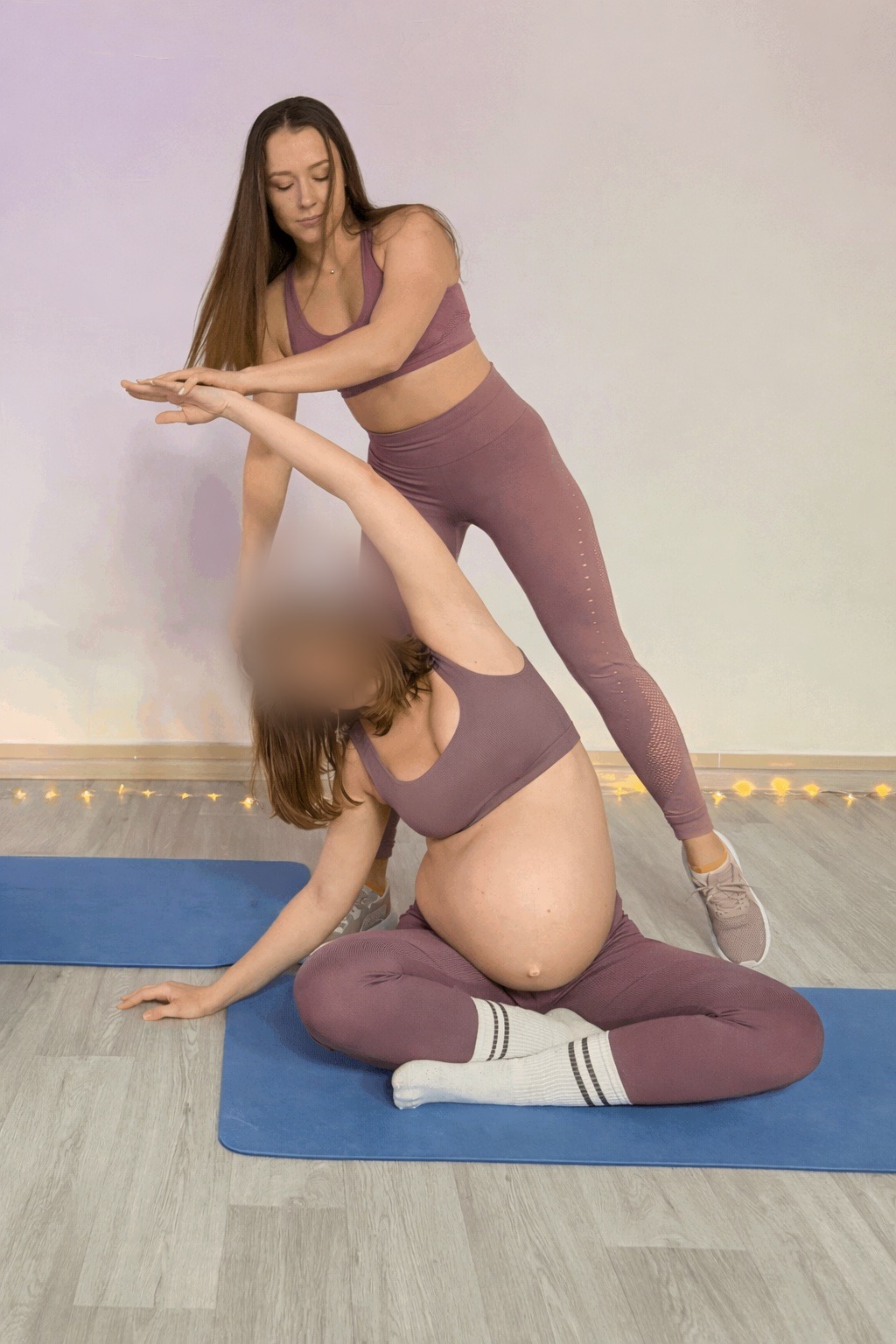
In short. Preparing the body for pregnancy takes at least 3 months, ideally 3–6, and is built around four blocks: pelvic floor (learning to feel and relax, not just to clench), breathing (diaphragmatic – the foundation for birth and recovery), strength base (priority on glutes and posterior chain so the lower back does not take on extra work), normalising weight and cycle. Three minimum exercises: diaphragmatic breathing 5 minutes a day, Kegel with a focus on relaxation 2 times a day, functional squat for 3 sets every other day. If BMI is above 30 it is worth bringing it to 25–29 before conception (excess weight reduces fertility and complicates pregnancy), but through a gentle deficit of 200–300 kcal plus strength work, not through fasting. Standard set of tests before starting: full blood count, ferritin, TSH – to rule out anaemia and thyroid issues that interfere with both fertility and load tolerance. Women who go into pregnancy prepared face lower back pain, gestational diabetes, diastasis recti wider than 3 fingers and urinary leakage after birth less often.
A body prepared for pregnancy faces diastasis wider than 3 fingers, lower back pain and incontinence after birth significantly less often – not a guarantee but a strongly shifted probability that comes from 3–6 months of intentional work.
Why prepare the body for pregnancy if I am healthy
Health and “readiness for pregnancy” are not the same thing. A healthy woman can enter pregnancy with an over-tense pelvic floor, forgotten diaphragmatic breathing, weak glutes and a hypermobile lower back. The pregnancy will go ahead – but with back pain, swelling, early shortness of breath, stress incontinence and a long recovery after birth.
Three months of intentional preparation really change the picture. Women who came into pregnancy prepared face lower back pain, gestational diabetes, diastasis recti wider than 3 fingers and urinary leakage after birth less often. It is not a guarantee but a strongly shifted probability.
What to do: four blocks across 3–6 months
Block 1. Pelvic floor: learn to feel and relax
Before pregnancy almost no one works with the pelvic floor – and during pregnancy it holds the growing uterus for nine months, in birth it stretches 2–3 times, after birth it recovers. If it cannot consciously contract or fully relax, recovery takes a long time.
What to do in practice.
- Master Kegel exercises: short contractions (2 sec) plus long ones (up to 10 sec), 2–3 times a day for 10 reps.
- Separately train relaxation. Contract and slowly fully release. Half of pelvic floor problems are not weakness but chronic over-tension, which gets in the way of the baby passing through during birth.
- Test: sitting on a chair, can you consciously contract and release the muscles “inside”? If not – that is the first task.
Block 2. Diaphragmatic breathing
Breathing “as usual” is chest breathing, shallow, with a tight diaphragm. Pregnancy needs something different: breathing “into the belly” with a mobile diaphragm that works in tandem with the pelvic floor. This is a skill. It does not appear on its own.
What to do.
- 5 minutes daily. Lying on your back, knees bent, one hand on the chest, the other on the belly. Inhale through the nose – the belly rises, not the chest. Exhale through the mouth – the belly drops, the pelvic floor gently draws up.
- By the end of the first month it should become automatic. In pregnancy this breath will be the main tool: in training, in birth, in recovery.
Detailed technique – in the breathing exercises article, same scheme.
Block 3. Strength base
Pregnancy requires strength that many do not think about: glutes hold the pelvis and unload the lower back, lats hold posture, legs carry +10–15 kg and a baby in the arms after birth. Weak ones hurt, strong ones work.
Minimum for 3 months.
- Squats with bodyweight or light dumbbells – 3 sets of 10–12, 2 times a week.
- Reverse lunges – 3 sets of 8 per side.
- Rows with a band or dumbbells – 3 sets of 10.
- Bench or floor push-ups – 3 sets of 6–10.
- Glute bridge – 3 sets of 12.
No “record” weights. Technique matters more than load. The goal is not a gym result but a functional base for pregnancy.
Block 4. Cardio and general endurance
Pregnancy is endurance work. Not strength, not speed. The cardiovascular system needs to be ready for constantly elevated load – blood volume grows by 30–50%.
What is enough.
- 150 minutes of moderate activity a week. The recommendation from current clinical guidelines is the same for preparation and for pregnancy itself.
- Brisk walking, swimming, elliptical, cycling. Running – if you already run and do not want to stop.
- Talk test: during the load you should be able to speak in short sentences but not sing.
Weight, cycle, food – what to address and what to leave alone
If there is excess weight
Extra 5–10 kg before pregnancy raises the risk of gestational diabetes, preeclampsia, a larger baby and a difficult birth. It makes sense to reduce – but not “urgent –15 kg in 2 months”. A sharp calorie deficit breaks the cycle and depletes mineral stores that the body should be entering pregnancy with.
How to do it right. A moderate deficit of 300–500 kcal a day, a pace of 0.5–1 kg a week, starting at least 3–6 months before trying to conceive. The weight has stabilised for 1–2 months – then enter pregnancy.
If there is a weight deficit or no cycle
This is a red flag. Amenorrhea from overtraining and underfeeding is a common reason pregnancy does not happen. First restore the cycle: lower training intensity, increase food, add fats, bring ovulation back. Only after a stable cycle for 2–3 months in a row – attempts to conceive.
Food: what really matters
- Folic acid – 400 mcg a day starting 3 months before planning. Reduces the risk of neural tube defects. Proven.
- Iron – check ferritin, often low in women, especially with heavy periods. Pregnancy with low ferritin means anaemia, fatigue, dizziness.
- Vitamin D – check levels, deficiency is common. Optimum 60–80 ng/ml.
- Omega-3 – 1000–2000 mg a day from fish or supplements, important for the development of the baby’s nervous system.
This is not the full picture – tests are handled by your doctor. But these four are worth checking.
Who to see before planning
- Obstetrician-gynaecologist – examination, smear, pelvic ultrasound.
- Dentist – treat outstanding issues, during pregnancy treatment is restricted.
- GP – general check-up, blood tests, thyroid.
- Endocrinologist – if there are cycle disruptions, over- or underweight, unexplained fatigue.
It is a one-time investment of 3–5 visits. Pregnancy without them is a lottery.
What NOT to do during preparation
- Start heavy strength work “to make it in time”. If you have not trained before, that is not a reason to push for maximums 2 months before conception. Big load without a base is a risk of injury and cycle disruption.
- “Cleanse” with strict diets, fasting, detox marathons. Pregnancy needs a stable, not depleted, start.
- Panic over 1–2 irregular cycles. This is normal, especially under stress. Observe for 3 cycles – if it does not return, see a doctor.
- Train to exhaustion “while I still can”. Overtraining is a direct route to amenorrhea.
What this looks like in a real programme
In preparation, I usually move a client through phases:
- Months 1–2 – assessment, basic learning (breathing, pelvic floor, technique), moderate load 2 times a week.
- Months 3–4 – building strength, stabilising weight, strengthening the core.
- Months 5–6 – maintaining form, preparing for reduced load in the first trimester.
By the time of a positive test, the body is in the right shape, breathing and Kegel skills are automatic, and pregnancy becomes a continuation rather than a sharp turn.
A detailed plan for this period – on the Before-pregnancy programme page. If you want a programme for your specific situation, goals and schedule – book an intro session, we will go through it together. From 1 600 roubles online.