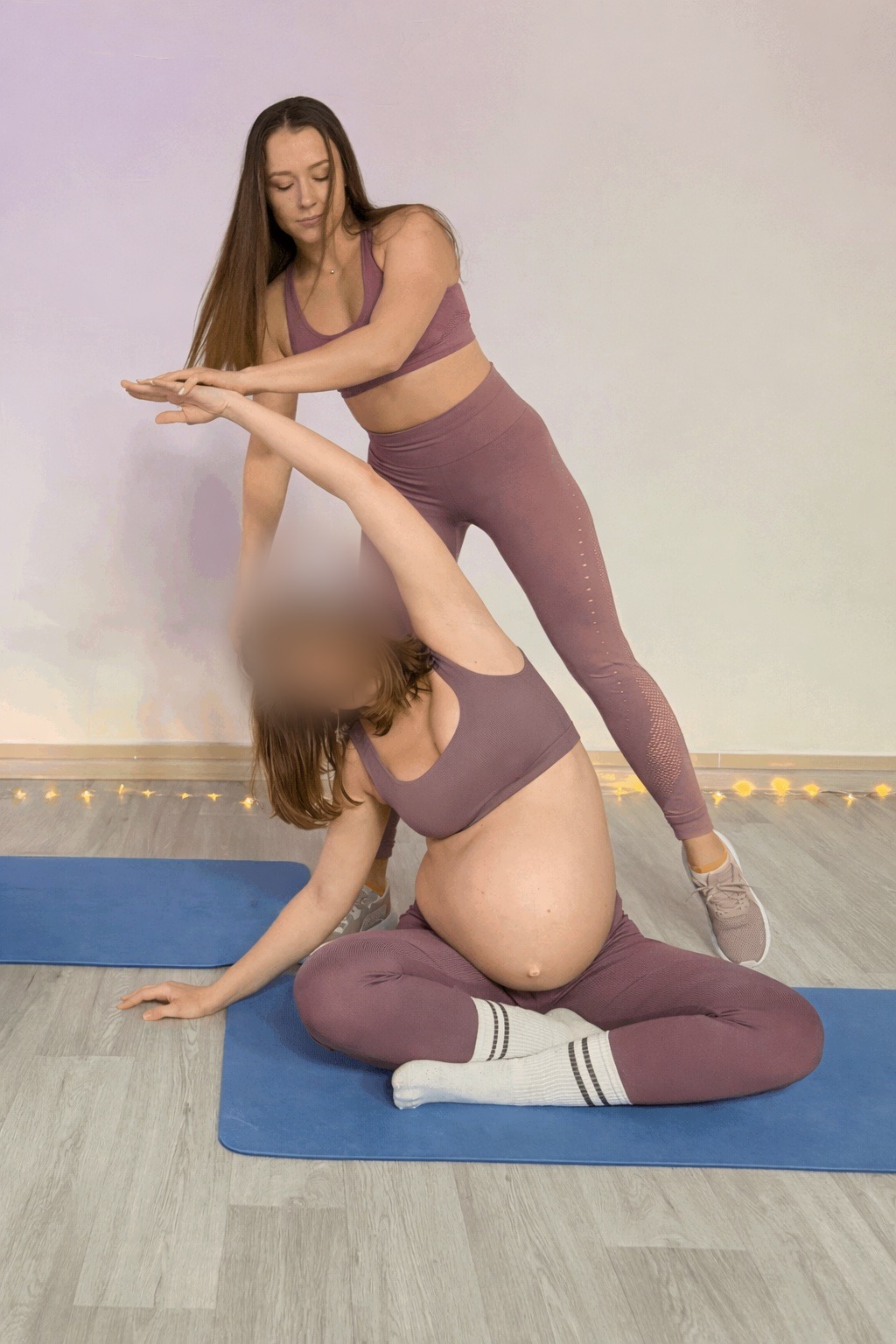
In brief. A C-section is abdominal surgery with incisions through several layers of tissue (skin, fascia, muscle, peritoneum, uterus), and training afterwards is built more slowly than after vaginal birth. Timeline in Samara: first 6-8 weeks – only calm walking and gentle breathing while the scar is forming; months 2-3 – careful pelvic floor work and mobility; from months 4-6 – more active sessions; full training – usually after 6 months if there are no complications. In the first year after a C-section, the following are off-limits: crunches, leg raises, direct plank until the scar matures and diastasis closes, heavy weights, running, jumping, HIIT without medical clearance and a pelvic floor assessment. A sound programme starts not with exercises but with assessment: pelvic floor, diastasis, scar (maturity and mobility), and overall state. A good trainer in Samara is recognisable by their request for medical data, partnership with a gynaecologist, and refusal to promise “your shape back in three months”. I work with C-section recovery in person and online, intro session – from 1,400 rubles.
The scar after a C-section is not just a mark on the skin – it is a zone where muscles, fascia, and peritoneum have been sutured, and until it matures (at least 6 months) any load on the front abdominal wall can slow healing or trigger adhesions.
A C-section is abdominal surgery. After it the body recovers differently than after vaginal birth, and the question of returning to physical activity is especially sharp. Many women either start too early, rushing to “get back in shape”, or postpone indefinitely, afraid of doing harm. Both extremes are problematic.
In this article we look at how recovery after a C-section is structured, when and how to start training, what to do at each stage, and where in Samara to find a specialist who can help you walk this path correctly.
What happens to the body after a C-section
In a C-section, several layers are cut: skin, subcutaneous tissue, the aponeurosis (fascia), muscles are pushed aside, then the peritoneum and uterus are opened. After that, each layer is sutured back.
This means the scar is not just a skin mark. It is a zone where deep tissues have been sutured: muscles, fascia, peritoneum. Until this scar matures, any load on the front abdominal wall is potentially risky.
In addition to the scar, after any birth – including a C-section – you also need to account for:
- weakened pelvic floor (the pressure of the pregnant uterus does not disappear, even if birth was not vaginal)
- possible diastasis recti
- hormonal change affecting ligaments and joints
- general depletion, especially while breastfeeding
All of this needs to be considered when building a recovery programme.
When you can start training after a C-section
There are no strict universal timelines – much depends on how the surgery went, how healing is progressing, and how you feel. But there are general markers.
First 6-8 weeks is the period when active load is off-limits. At this time the scar is only forming. Allowed: walks at a calm pace, gentle breathing, light pelvic floor work – only if there is no discomfort and the doctor does not object.
2-3 months after surgery – you can carefully add gentle work with the body: pelvic floor exercises, breathing techniques, gentle mobility. No abdominal load, no crunches, no planks.
4-6 months – provided the scar has healed well and there are no complications, you can gradually add more active work. A consultation with a doctor and a scar check is advisable before starting.
6 months and later – most women at this point can train fully, although abdominal load is still added cautiously and gradually.
Important: these timelines are guidelines. If there were complications after the C-section, timelines shift. Always be guided by your doctor and by how you feel.
How training starts
Sound recovery after a C-section starts not with training but with assessment. A postpartum recovery specialist looks at several things:
Pelvic floor. Even after a C-section the pelvic floor is weakened. It needs separate work – not just Kegels (which are often done incorrectly), but an understanding of how to activate and release these muscles.
Diastasis. Separation of the rectus muscles is present in most women after pregnancy – both after a C-section and after vaginal birth. The presence of diastasis changes the training programme: a number of exercises are off-limits. For detail on which movements help and which worsen the separation, see Diastasis recti after childbirth: exercises.
Scar. A mature scar is not just healed skin. Scar tissue can restrict mobility and create asymmetry in muscle work. Scar mobilisation is a separate aspect of recovery, handled by specialists.
General state. How much you sleep, how you eat, whether you have any pain – all of this shapes what we can work with right now.
What to avoid in the first year after a C-section
Some restrictions stay in place for a long time – sometimes up to a year after surgery.
- Ab exercises: crunches, leg raises, direct plank – until the scar fully matures and diastasis closes
- Heavy weights: load on the front abdominal wall too early
- High-intensity training: running, jumping, HIIT – without medical clearance and a pelvic floor check
- Exercise through pain: if something pulls or hurts, that is a signal, not a reason to “push through”
Many of these restrictions seem excessive. Behind them stands real risk: pelvic organ prolapse, widened diastasis, scar problems. Better to recover more slowly but correctly.
How to find a C-section recovery specialist in Samara
Not every fitness trainer can work with postpartum recovery, and work after a C-section requires even more specific knowledge. What to look for:
Experience specifically in postpartum recovery. The trainer should understand the specifics of a C-section, scars, diastasis, and the pelvic floor. If a trainer says “standard postpartum programme” without specifics – ask for them yourself.
Working with a doctor. A good specialist will ask for medical details: what was prescribed, when the follow-up check is, whether there are complications. Working with a gynaecologist is the norm, not the exception.
Willingness to work slowly. Recovery after a C-section is not “back in shape in three months”. A specialist who promises fast results is most likely rushing at the cost of your health.
More on the approach to safety in the corresponding section of the site.
How working with me is structured
I specialise in recovery after childbirth, including after a C-section. I work in Samara in person and online.
The first step is the intro session. There I learn about your surgery, timelines, how you feel, current restrictions. We do not train physically – it is a meeting and assessment of the situation. Based on it, I build a programme that fits your specific case.
After that – sessions at a comfortable pace. The programme changes as recovery progresses: what was off-limits in the first months is gradually added. Load increases, but only when the body is ready.
Intro session – from 1,400 rubles (online). More on formats and pricing – here.