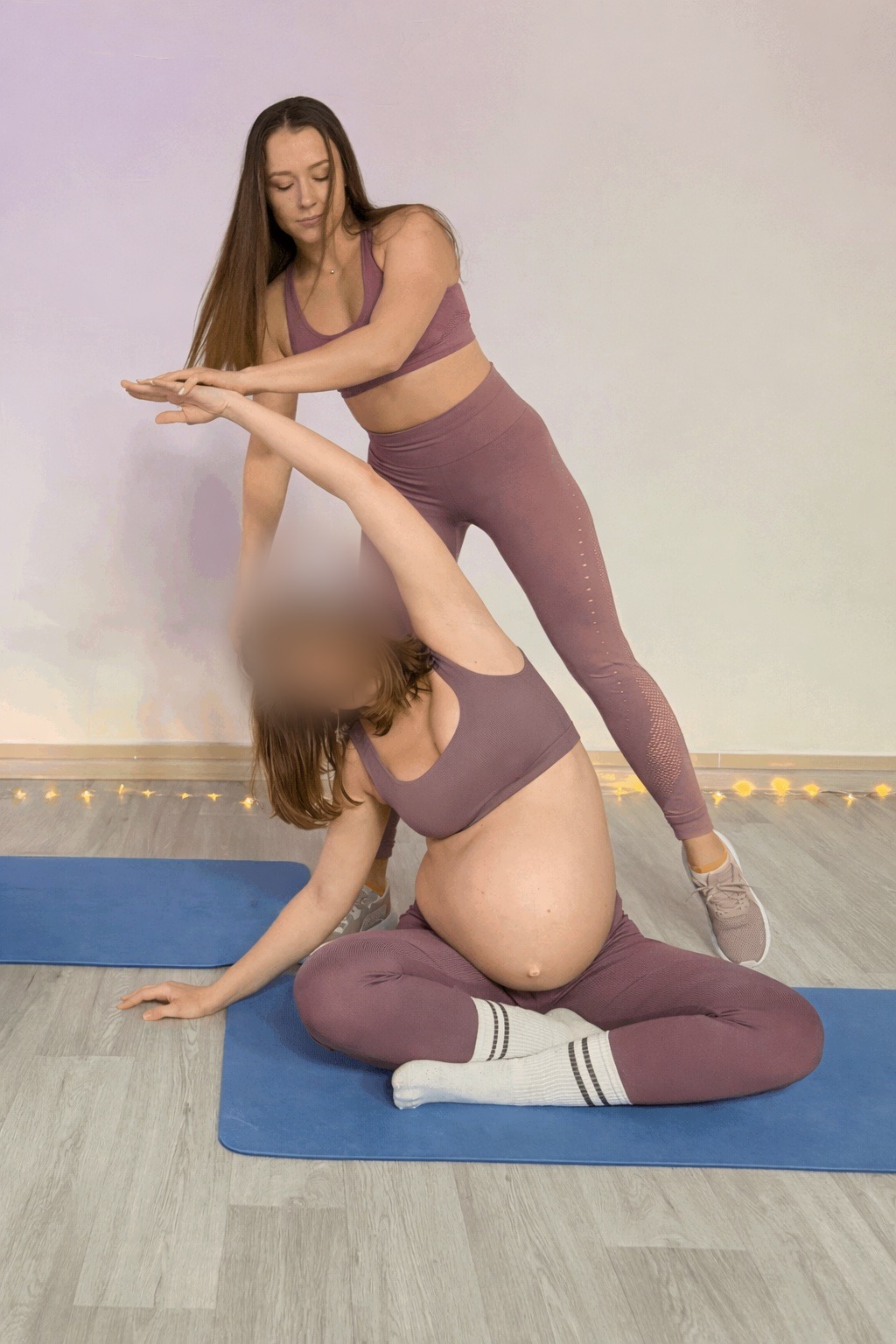
In short. Prenatal gymnastics is a gentle set of exercises focused on flexibility, breathing, pelvic floor and the muscles involved in birth. It differs from prenatal fitness in pace and load: less cardio and strength, more work lying down and seated, more breathing techniques and birth preparation. The optimal routine is two sessions a week of 40–50 minutes, starting in the second trimester after early nausea fades. The programme excludes: any load on the belly (twists, classical abdominal work), lying on the back after 16–20 weeks, jumping, running and sharp movements. In the third trimester the format shifts towards breathing and pelvic floor work, intensity goes down. When choosing a studio, look at the trainer’s specialisation, a mandatory intro consultation and group size (no more than 6 people). For women without a training background and those who do not handle high load well, gymnastics is a more comfortable entry into activity during pregnancy than regular fitness.
Lying on the back after 16–20 weeks is removed from all prenatal gymnastics programmes – even if a woman feels no discomfort, the enlarged uterus can compress the inferior vena cava and reduce blood flow to the fetus.
The word “gymnastics” often worries pregnant women: it sounds like splits, acrobatics and loads you should not experiment with. In practice, prenatal gymnastics is gentle exercise that helps maintain muscle tone, relieve discomfort in the back and pelvis, and prepare the body for birth. Nothing complicated and nothing dangerous – if the programme is built right.
This article covers what prenatal gymnastics is, how it differs from regular fitness, which exercises are safe at different stages, and how to find a suitable specialist.
How gymnastics differs from prenatal fitness
In everyday speech these terms are often mixed up, but there is a difference.
Prenatal fitness is a broader concept. It includes cardio, strength exercises, bodyweight work, Pilates and other formats. The main emphasis is on maintaining physical form and endurance.
Prenatal gymnastics is a set of exercises focused on flexibility, breathing, work with the pelvic floor and the muscles involved in birth. The load is softer, the pace calmer, with many exercises lying down and seated.
In practice a good trainer combines both approaches, adapting the programme to the current stage and how you feel. But if a woman has never trained, does not like intense sessions or struggles with high load, gymnastics is a more comfortable entry into physical activity during pregnancy.
Why prenatal gymnastics helps
Regular sessions during pregnancy address several tasks at once.
Relieving back and lower back pain. As the belly grows, the load on the spine increases. Correct exercises strengthen the stabilising muscles and release tension. Many women notice that lower back pain reduces significantly after just a few sessions.
Preparing the body for birth. Gymnastics includes pelvic floor exercises, breathing techniques and work with pelvic positioning. All of this is directly linked to how birth goes.
Reducing swelling. Moderate movement improves blood and lymph flow, which helps with the typical leg and arm swelling of pregnancy.
Supporting the emotional state. Physical activity reduces anxiety and helps you feel your body better. Many women say training gives a sense of control and calm in a period when much is changing.
What is in a prenatal gymnastics programme
The programme depends on the stage and the state, but usually includes several blocks.
Breathing exercises
Learning diaphragmatic and chest breathing, relaxation techniques. This matters not only for the sessions – correct breathing also helps during birth.
Pelvic floor work
Kegel exercises and their variations, techniques for relaxing the pelvic floor muscles. Many women have heard of Kegels but do them incorrectly – the trainer helps build the technique from scratch.
Hip mobility
Gentle work with the pelvis: circular movements, hip flexor stretches, exercises that take load off the lower back. In later pregnancy these are especially valuable for comfort.
Shoulder and back work
The thoracic spine is often tight in pregnancy due to posture changes. Gentle work with the thoracic spine, chest stretches, back strengthening.
Gentle strength work
Depending on the stage and conditioning – bodyweight exercises: supported squats, glute bridges, modified planks. The key is no load on the abs and no twists.
What to avoid during pregnancy
Despite the benefits of gymnastics, there are exercises and situations to avoid.
- Load on the belly: twists, abdominal crunches, any exercise that tenses the abdominal wall
- Lying on the back after 16–20 weeks: presses on the inferior vena cava and reduces blood flow
- High-intensity loads: jumping, running, exercises with sharp movements
- Exercises that cause pain or discomfort: if something feels off – that is a signal to stop
A qualified trainer knows these limits and builds the programme without unsafe elements from the start.
How to find a prenatal gymnastics trainer
There are several formats: group classes in fitness clubs and studios, prenatal yoga, one-on-one sessions. When choosing, a few things matter.
Specialisation. It is worth having a trainer who works specifically with pregnant clients, not one who runs regular sessions with “small adaptations”. The difference in approach and understanding is significant.
Education. A professional trainer has a base sports-science education and additional training in prenatal fitness. It is not always a specific certificate, but the specialist should understand the physiology of pregnancy and how to work with its specifics.
Intro session. A specialist who respects their craft runs an intro consultation before any training – they take your history, ask about medical clearance, discuss restrictions and goals. If you are signed up for a session straight away with no questions – that is a warning sign.
Group size. If you train in a group, it matters that the group is small – up to six people. Otherwise the trainer simply cannot track each participant’s technique.
More on what to look at when choosing a specialist – on the safety and approach page.
When to start and how often
The optimal start is the second trimester, when nausea has faded and how you feel has stabilised. But if pregnancy is going without complications and your doctor agrees, you can start in the first trimester – with very gentle load.
Frequency: two sessions a week of 40–50 minutes is a good rhythm for most women. That is enough for effect without overloading the body.
In the third trimester the format usually shifts: more breathing techniques, pelvic floor work, gentle mobility. Intensity drops, the focus moves to birth preparation.
Contraindications
Prenatal gymnastics is a safe form of activity, but not for everyone and not in every situation. Sessions are not recommended in:
- threatened miscarriage
- placenta previa
- multiple pregnancy with complications
- severe gestosis
- other conditions where the doctor has prescribed bed rest
Before starting, you always need clearance from your obstetrician-gynaecologist. A good trainer knows this and will ask to see a doctor’s note.
Where to start
If you want to start prenatal gymnastics – the first step is an intro session with a trainer. We review your situation, look at your medical clearance, discuss goals and the specifics of your pregnancy. Based on that, an individual programme is built.
I work with pregnant clients in Samara and online. The intro session is from 1 400 roubles (online). It is not a workout but an introduction: no pressure and no obligations.