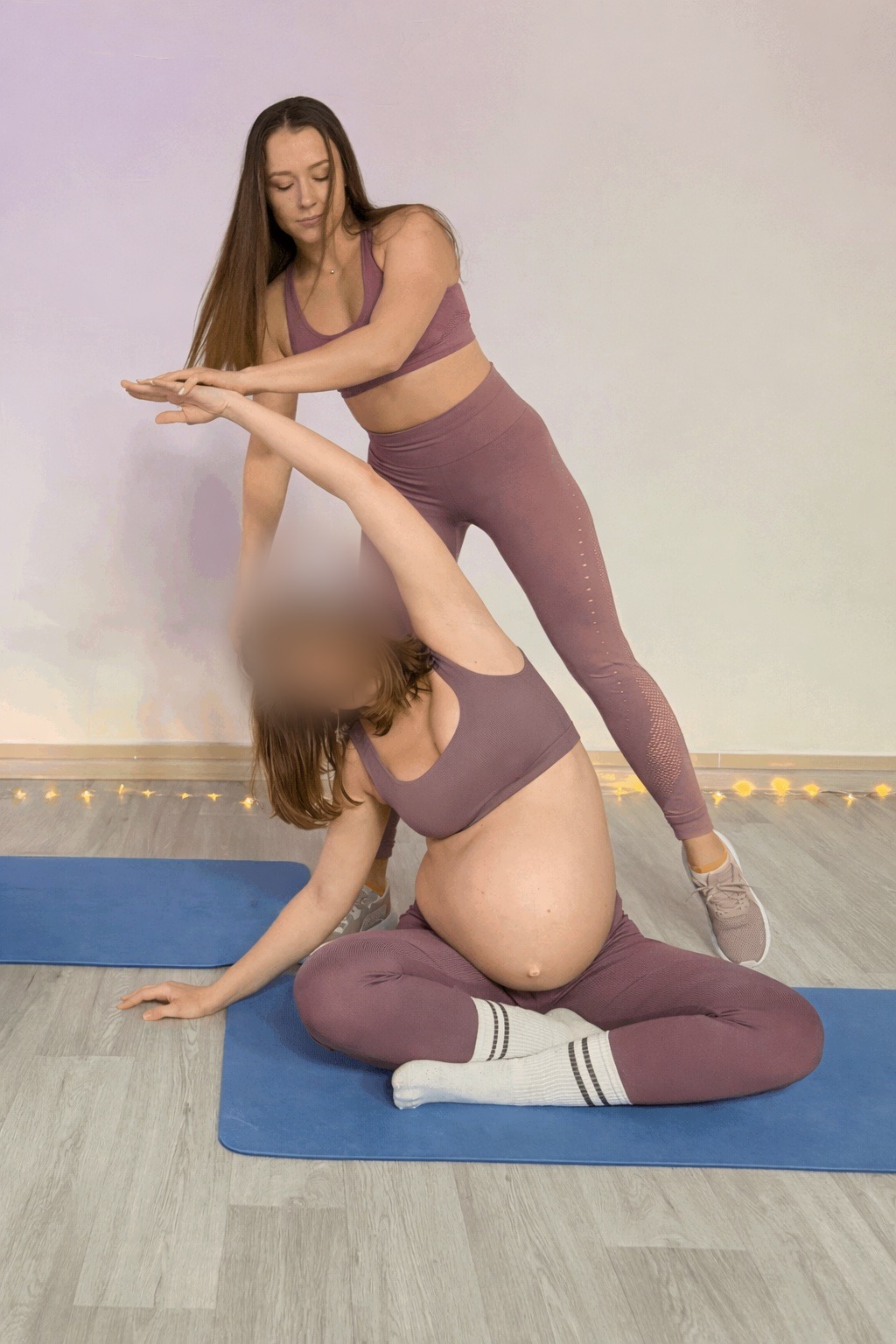
In brief. Sleepiness after a workout during pregnancy is a normal response, not a sign of overload. Progesterone acts as a natural sedative, the heart pumps a third more blood, fuel stores run down faster, the body runs warmer – all four factors add up after exercise. If you fell asleep within an hour and woke rested 30–90 minutes later, that is a healthy recovery signal. Be alert if you wake up more wrecked than before, if you feel dizzy and your hands shake, if your heart is pounding at rest, or if the next day you cannot manage ordinary tasks – that points to overload, low blood sugar, anaemia or thyroid issues. Recovery is faster with a carbohydrate-protein snack in the first 30 minutes, water before and after, a short 20–30 minute nap (no longer, or it breaks the night), training inside your trimester’s energy window, and regular ferritin and TSH checks.
Sleepiness after a workout in pregnancy is not because the load was too big – it is because the body has switched into recovery mode, and the progesterone background is felt especially strongly.
Why a workout switches a pregnant woman off so completely
Progesterone – a natural sedative
Pregnancy brings a sharp rise in progesterone – the hormone that gently calms. There is many times more of it than in the non-pregnant state, and it acts on the brain like a mild natural sedative. After a workout, when the body shifts into its «exhale» mode, that background is felt especially strongly. Hence falling asleep so easily.
The heart is working for two
A pregnant woman has a third more blood, and the heart pumps it a third more actively – even while simply sitting. Any load starts from that raised baseline. After a workout the body needs longer to return to rest.
Fuel stores run down faster
The baby takes glucose – the fuel the brain and muscles run on. The mother’s liver holds less of that fuel than before. After a workout the stores empty quickly and refill slowly. An hour or an hour and a half later, that «switching-off» tiredness rolls in.
The body is already warmer inside
Progesterone raises body temperature by half a degree. A workout adds more. And sleep arrives precisely as the body begins to cool – that is how falling asleep is wired. A mother-to-be enters that phase from a higher peak, so she drops into sleep more easily.
A hidden iron shortfall
Even when the blood test says everything is «within range», iron is often still short – it goes to the baby. And it is iron that carries oxygen around the body. Without it, recovery after a load is slower and fatigue lands harder.
When sleep after a workout is a good sign
- You fell asleep within an hour of the session and woke 30–90 minutes later rested
- Night sleep was not disrupted by the nap
- The next day there is no «wrecked» feeling, the training does not pile up like a stone
- Appetite is normal, and by the next meal you have recovered
If all four line up, the body said «thank you» and went into recovery.
When sleepiness is a reason to be alert
- You slept but woke up more wrecked than before
- After the workout you feel dizzy or nauseous and your hands shake – that points to low blood sugar
- Your heart is still pounding at rest an hour later
- The next day you cannot manage ordinary tasks – the weakness does not lift
- Fatigue comes with pallor and breathlessness from any movement – anaemia is possible
- A sudden headache, facial swelling, darkening vision – that is emergency care, without delay
What helps you recover faster
-
Eat within the first half hour – something with carbohydrates and protein. Banana with cottage cheese, porridge with nuts, a chicken sandwich. A window opens in which muscles and liver are ready to take energy up quickly.
-
Drink water before and after. A glass before the session and one or two after.
-
A short 20–30 minute nap if sleep is pulling at you. It works as a reset. A long 2–3 hour daytime sleep breaks the night – and night sleep matters more in pregnancy than daytime sleep.
-
Train inside your own energy window. In the first trimester more often in the morning, in the second almost any time, in the third in the second half of the day (nausea no longer catches you, and evening is not yet close). A detailed breakdown of how loads change across the weeks is in the article on fitness by trimester.
-
Blood tests twice a year. Iron (ferritin, not only haemoglobin) and thyroid. These are the most common causes of «unexplained» fatigue, and the easiest to miss.
Breathing as a recovery accelerator
After a workout the body switches into recovery on its own, but diaphragmatic breathing speeds that transition up. It engages the part of the nervous system responsible for the «exhale» – the heart slows, muscles release, glycogen restores faster. Five minutes of calm breathing lying on your side straight after a session is a simple tool that genuinely works. More on the techniques is in the article on breathing exercises for pregnancy.
The bottom line
Sleepiness after a workout is not a reason to stop training, and not a warning that you are overloading yourself. It is a normal signal that the body responded correctly to the load and went into recovery. The main thing is learning to tell healthy sleepiness from the concerning kind, using the checklists above.
If you want to build your training around your own state and stage, taking your wellbeing and history into account, come to a first session. We will look at how your energy is running right now and choose a load that leaves you with «thank you» rather than «I need to lie down». You can book here.