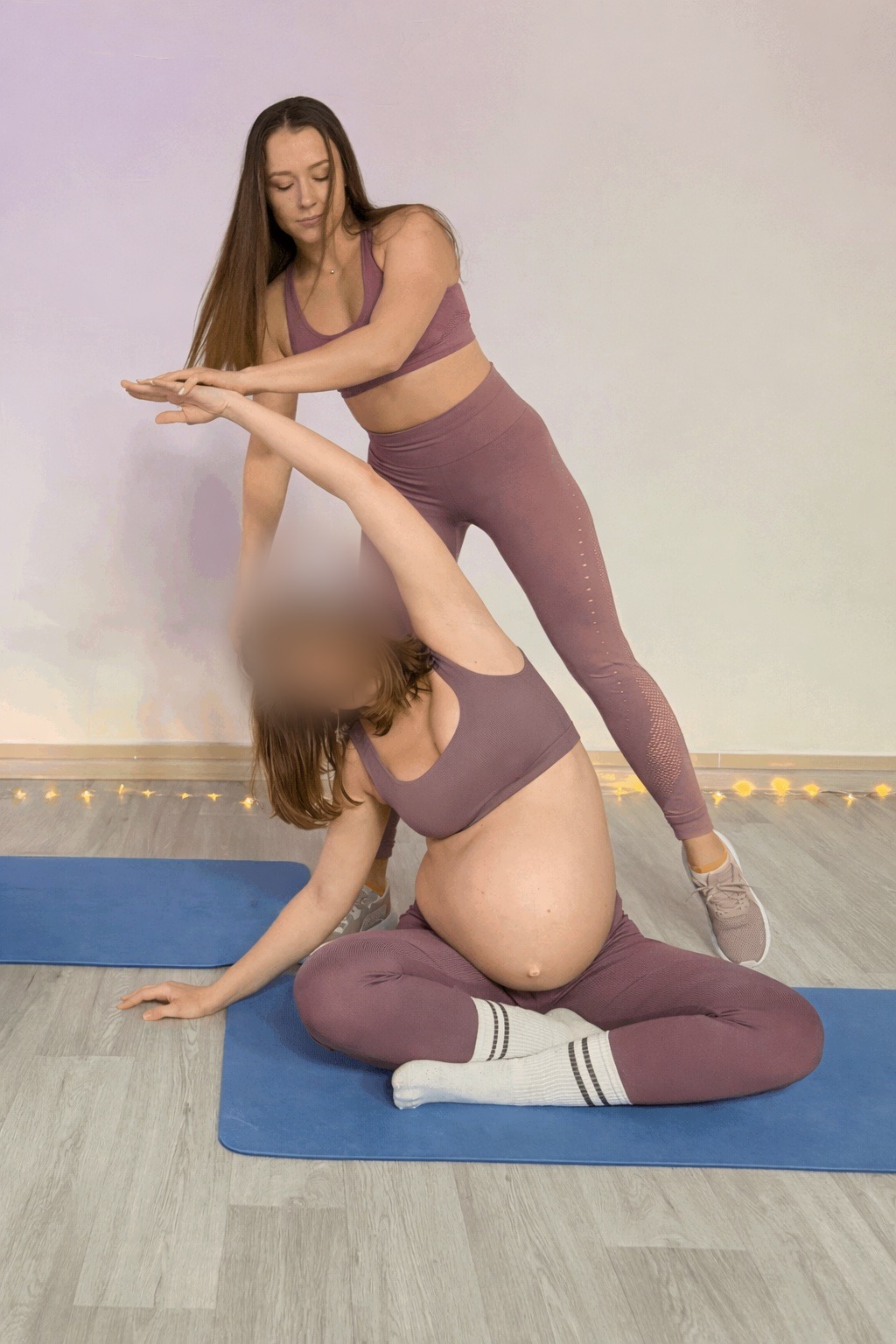
In brief. Yoga or fitness in pregnancy is not “either/or” but different tools for different jobs. Prenatal yoga focuses on gentle mobility, breath, relaxation, a conscious connection with the body, and skills useful in labour – static poses, breathing practice, a typical session of 60–75 minutes. Prenatal fitness is an adapted physical workout focused on functional strength, endurance, and maintaining muscle tone – strength exercises with body weight or moderate resistance, moderate cardio, a typical session of 45–60 minutes. Yoga suits you if you have prior yoga experience, want to focus on relaxation and managing anxiety, or want to prepare for labour through awareness and breath. Fitness suits you if you have a strength background, want to keep muscle mass and endurance, and prefer active work. Optimal mix is to combine them: 1–2 fitness sessions a week plus 1 yoga. Universal exclusions for both formats: supine position after 20 weeks, twists, inversions, jumping, hot yoga, ballistic moves. The main criterion of choice is the instructor’s qualification in prenatal specialisation.
1–2 prenatal fitness sessions a week plus one yoga session is the optimal balance in an uncomplicated pregnancy: fitness gives strength and endurance, yoga adds mobility, breath, and work with anxiety.
The eternal question: which is better
When a mum-to-be decides it is time to start training, the first question usually sounds like this: yoga or fitness? Online there is a mass of contradictory opinions. Yoga fans say fitness is too intense for pregnant women. Fitness supporters think yoga is “just stretching”. The truth, as usual, is more complex.
Both formats can be an excellent choice during pregnancy – but each gives something different. To choose deliberately, it is worth understanding what stands behind each and how they adapt to the needs of a pregnant body.
What prenatal yoga is
Prenatal yoga is an adapted practice that focuses on gentle mobility, breath, relaxation, and a conscious connection with the body. This is not standard yoga with inversions and deep back bends – during pregnancy many classic asanas are excluded or significantly modified.
What prenatal yoga gives:
- Better joint mobility and muscle elasticity
- Breath work that comes in handy directly in labour
- Less anxiety, better emotional state
- Gentle strengthening of back and pelvic floor
- Awareness – the ability to feel your body and its signals
- Preparation for labour through practising relaxation and breathing techniques
Prenatal yoga works above all through slow, controlled movements. There is no rush, no competition with yourself, no push for “maximum result”. The emphasis is on the process, not the output.
A typical session includes: warm-up, gentle dynamic sequences, static poses with hold, breathing practice, relaxation at the end. Duration is usually 60–75 minutes.
What prenatal fitness is
Prenatal fitness is an adapted physical workout aimed at maintaining muscle tone, functional strength, and endurance. This is not standard group fitness with jumps and heavy weights – the programme is built around the stage of pregnancy, body changes, and restrictions.
What prenatal fitness gives:
- Strengthening of muscles that support spine and pelvis
- Cardiovascular endurance
- Prevention of back pain and posture problems
- Weight gain control
- Preparing the body for the physical load of labour
- Maintaining general tone and energy levels
Prenatal fitness works through active movements at moderate intensity. There is more dynamics, more resistance work, more attention to strength and function.
A typical session includes: warm-up, functional full-body exercises, body weight or light equipment work, cardio elements in a safe format, stretching at the end. Duration is usually 45–60 minutes.
Comparison: what each format gives
To make it easier, here is a concrete comparison on key parameters.
Strength and muscle tone. Fitness wins here. If your task is to maintain muscle tone, strengthen the back and legs, and prepare the body for the physical load of labour – fitness gives a more tangible result. Yoga also strengthens muscles, but through static holds rather than active strength work.
Flexibility and mobility. Advantage to yoga. Gentle stretching, joint work, smooth transitions between poses – all improve mobility, which is particularly important in the third trimester and in labour. Fitness usually includes stretching at the end, but it is not the main focus.
Breath and relaxation. Yoga, unambiguously. Breathing practices are a central part of the session, not an addition. Conscious breathing and exhale-relaxation are some of the most valuable skills for labour. In fitness breath is also accounted for, but as a tool for performing the exercise, not as a separate practice.
Emotional state. Both formats help mood. The mechanisms differ. Yoga lowers anxiety through awareness practice and relaxation. Fitness gives an endorphin release through physical activity. If you are prone to anxiety – yoga may suit better. If you lack energy – fitness will bring back a sense of strength.
Labour preparation. Both formats contribute, but differently. Yoga teaches relaxation, breath, letting go of control – skills critically important in labour. Fitness prepares the body for the physical endurance needed for a multi-hour process. Ideal preparation includes both.
Safety. With a qualified instructor both formats are equally safe. The key is not the name of the format but the qualification of the person running the session. More on safety principles and approach is on a separate page.
Who suits what
There is no universal answer, but there are guideposts.
Yoga may be the better choice if you:
- Did not train much before, or not at all
- Are prone to elevated anxiety or stress
- Want to specifically prepare for labour through breath and relaxation
- Like a slow, mindful approach to movement
- Have strong discomfort or pain that limits activity
Fitness may be the better choice if you:
- Trained before pregnancy and want to keep your form
- Like dynamic sessions and feel energised by them
- Want to specifically strengthen the back, legs, and core
- Are gaining weight faster than recommended and want to adjust that
- Prefer concrete, tangible training results
Can you combine them
Not only can you, but it helps. Combining yoga and fitness gives the fullest set of benefits: strength and flexibility, endurance and relaxation, physical preparation and breathing skills.
A combination option: 2 fitness sessions and 1 yoga session a week. Or the reverse – depending on your priorities and how you feel. Many pregnancy programmes already include elements of both approaches, and that is not by chance.
Important: do not train every day, especially in the third trimester. The body needs recovery. Three to four sessions a week with rest days in between is the optimal regime for most pregnant women.
Adaptations: what changes in each format during pregnancy
In both formats, standard programmes go through serious adaptation.
In yoga we drop: deep back bends, inversions, twists that pressure the belly, long lying on the back after 20 weeks, hot yoga, postures with a risk of losing balance. We add: pillows and blocks for support, modifications for a growing belly, a stronger emphasis on breath.
In fitness we drop: jumping and impact loads, exercises lying on the belly, heavy weights, straining with breath-holding, exercises with high heart rate, contact elements. We add: a focus on functional movements, pelvic floor work, posture control, longer rest between sets.
In both cases the programme must account for the trimester – what suits at 16 weeks can be inappropriate at 32.
How to choose: the main criterion
The most important factor is not the format but the specialist. Yoga with an inexperienced instructor who does not understand pregnancy can be more dangerous than well-run fitness. And the other way around.
When choosing, look at:
- Whether the instructor has a specialisation in prenatal work
- Whether they account for your stage and individual factors
- Whether they are ready to modify exercises for your condition
- Whether they ask about contraindications and how you feel
If the instructor gives the same programme to a woman at 14 and at 34 weeks – that is a red flag, regardless of whether it is yoga or fitness. More on how pregnancy training is structured in an individual format – on a separate page.
Bottom line
Yoga and fitness are not competitors but two tools with different strengths. Yoga works better with breath, relaxation, and emotional state. Fitness – with strength, endurance, and functional preparation. Together they give the fullest result.
If you lean towards yoga, see the breakdown of safe poses by trimester – it also lists the poses to drop after week 20.
If you cannot decide what suits you – come to a first session. We will choose a format that accounts for your stage, background, condition, and goals. It might be yoga, it might be fitness, and it might be a combination. Book the first session.